Ron Paul Quotes
When one person can initiate war, by its definition, a republic no longer exists.
Ronald E. Paul, U.S. Congressman (Republican, TX), Libertarian Nominee for President, War power authority should be returned to Congress, March. 9, 1999
Sourced by: Eigen's Political and Historical Quotations


Opposing electronic town meetings and referendums:

This was the group that decided who was to be executed in the Reign of Terror


Jefferson and a number of other Founding Fathers were so against aristocracy and monarchy that the assumed that the only way to prevent it was to have all government officials subjected to annual elections. Jefferson was not at the constitutional convention, while annual elections were considered, the compromise that became the Constitution required 2 year elections for the House and 6 years for the Senate with 4 years for the Presidency.


The World Trade Center and the Pentagon had been attacked by terrorists. The Vice President and other White House senior staff had followed procedure and gone to the protected bunker in the basement of the White House. Cheney was right in that he and the President instituted many illegal practices and taking power from Congress and the Courts. However, the things they elected to do to skirt if not defy the law, were not even good policy and Cheney and Bush became the “government of men” but the result was one of the worst and least popular administrations.


At the start of the state of Israel, he wanted a written Constitution. However the first 60 person Knesset failed to agree upon enough to generate one. Nimerous attempts have been made, but there are few significant constitutional positions that a majority of the fractious Israeli population can agree upon. Israel at the end of te 20th century had given up on a constitution and became a legislative and common law nation. It is perhaps the hardest nation in which to practive law in that the common law that is recognized is based on Turkish Ottoman Law, Englaish Law and Jordanian law. Each of these was controlling at times in the recent past.
Many of the early democracies had failed when in crises the citizens turned to a strong leader who soon became a monarch. The early democracies did not have the mature democratic institutions that we now know are so important for the success of a democracy.


There are some who have argued that the United States 20th century of world dominance was an empire. Perhaps so, but it did not have most of the characteristics that Thucydides and most others thought of as characteristics of empire—occupation of nations, rule by the Imperial country, privilege in other nations of the Empire, control. Most important, in historical empires, money—in the form of taxes or goods was commandeered by the Empire for the mother country. The US taxed no one, and money flowed the other way in the most generous sharing of foreign aid in human history. The United States had great influence and was able to exert economic and sometimes military pressure on many nations of the world; American culture was adopted by many nations, but America rarely behaved as Empires historically did.


At the time of this statement most people thought that Bush was joking. But by the end of his Presidency many looked back on the quote and thought that Bush had such preferences. He unilaterally took the country into the Iraq War and assumed Presidential Powers that no other president had ever attempted. Most serious, his administration actually took the formal legal position that the President did not have to obey the law if he unilaterally thought that it was not in the nation’s interest from the point of view of the Commander in Chief. So many debate whether this quotation was a light hearted joke of a harbinger of his real feelings about the Presidency.

1st Baron Macaulay. He favored a House of Commons that was representative of property owners, a powerful House of Lords which were limited to the Aristocracy, and a Monarch who also had a great deal of power. He was not a democratic enthusiast.

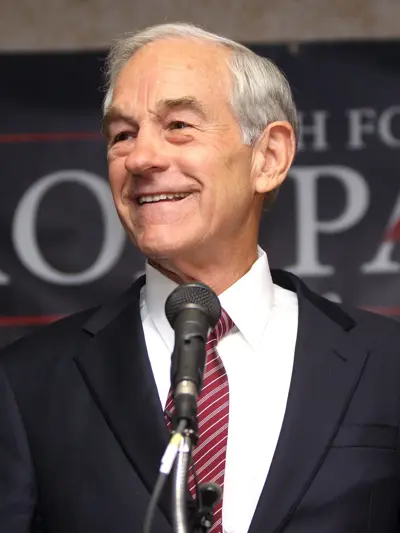
Ronald Ernest Paul is an American author, physician, and retired politician who served as the U.S. Representative for Texas's 22nd congressional district from 1976 to 1977 and again from 1979 to 1985, and for Texas's 14th congressional district from 1997 to 2013. On three occasions, he sought the presidency of the United States: as the Libertarian Party nominee in 1988 and as a candidate for the Republican Party in 2008 and 2012. A self-described constitutionalist, Paul is a critic of the federal government's fiscal policies, especially the existence of the Federal Reserve and the tax policy, as well as the military–industrial complex, the war on drugs, and the war on terror. He has also been a vocal critic of mass surveillance policies such as the USA PATRIOT Act and the NSA surveillance programs. He was the first chairman of the conservative PAC Citizens for a Sound Economy, a free-market group focused on limited government, and has been characterized as the "intellectual godfather" of the Tea Party movement, a fiscally conservative political movement that is largely against most matters of interventionism.
