Vladimir Zhirinovsky Quotes
The civilized world needs to think about a decision when single politicians are not allowed to stay in power.


In Dolgoff’s era, his argument was that the political parties were so powerful that it was they who controlled who held public office, not the voters. And the parties were controlled by a few party leaders. However, when the system was reformed in the latter part of the 20th century, the individual incumbent member of Congress in America was so hard to dislodge due to the role of money and the advantage of incumbency, that the class of professional politicians was still very powerful. Reform had reduced the control of political parties but not politicians.


Many of the early democracies had failed when in crises the citizens turned to a strong leader who soon became a monarch. The early democracies did not have the mature democratic institutions that we now know are so important for the success of a democracy.


There are some who have argued that the United States 20th century of world dominance was an empire. Perhaps so, but it did not have most of the characteristics that Thucydides and most others thought of as characteristics of empire—occupation of nations, rule by the Imperial country, privilege in other nations of the Empire, control. Most important, in historical empires, money—in the form of taxes or goods was commandeered by the Empire for the mother country. The US taxed no one, and money flowed the other way in the most generous sharing of foreign aid in human history. The United States had great influence and was able to exert economic and sometimes military pressure on many nations of the world; American culture was adopted by many nations, but America rarely behaved as Empires historically did.


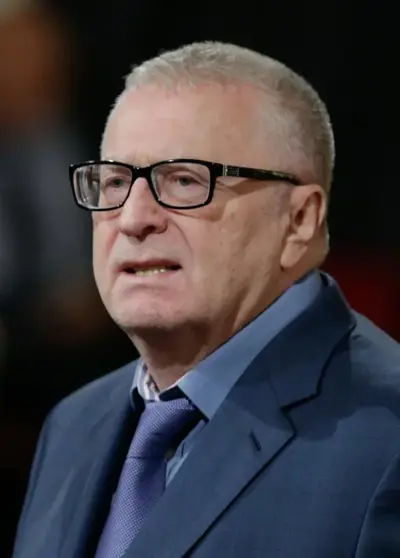
Vladimir Volfovich Zhirinovsky is a Russian politician and leader of the Liberal Democratic Party of Russia. He is fiercely nationalist and has been described as "a showman of Russian politics, blending populist and nationalist rhetoric, anti-Western invective and a brash, confrontational style". During the 1990s, his views were sometimes described in the West as fascist. He is considered by Russian scholars as a neo-Eurasianist.
