Jose Antonio Castro Quotes
On receipt of this message, you will immediately retire beyond the limits of California
California was then Mexican Territory. Castro gave permission to Fremont and his troops to buy supplies and provisions but then insisted that the foreign troops leave California. Fremont did not want to be seen as being ordered about by Mexico. He ordered his men to the top of a small mountain, constructed a makeshift fort on Hawk’s Peak, and raised an American Flag at the summit. See {634736}.
Jose Antonio Castro, 1808–1860, Acting Mexican governor of Alta California, Commandante General of the Mexican army in Alta California, Message to American General John C. Fremont, March 5, 1846
Sourced by: Eigen's Political and Historical Quotations

Fremont led his troops into the Mexican territory of California without permission. When he was ordered out (see related quote), he refused and ordered his men to the top of a small mountain, constructed a makeshift fort on Hawk’s Peak, and raised an American Flag at the summit. Fremont wanted California for America, and he was apparently prepared to precipitate an Alamo type situation where his band would be wiped out, and the United States, to avenge the massacre and in the process, take California. He thought better of the idea however, and after 3 days retired before any shots were fired. However, the next few years saw the United States virtually take over California.


Secession of the South was not a new idea stimulated by the election of Abraham Lincoln. Fully 10 years before, there was this plan to form a Slave state union which would expand into Mexico and the Caribbean.


Mexico was in a chaotic state with the central government not able to control the countries, especially in the North. There were numerous American proposals like this one. See {596782}.


America had declared war on Mexico and President Polk had designs on California and other territory.

Explaining why he appointed James Buchanan as Ambassador to Russia:

The Louisiana Purchase was part of a much larger grand vision for American expansion.


First Indian to hold the position


At the time, the United States wanted as many Mexicans as citizens as they could get—so much so that if Mexicans in the new American territories did not elect American Citizenship within 1 year, they became American Citizens automatically.

In 1991 Bush’s father, and his military and security advisors, after winning an overwhelming victory and accomplishing the war aims stated of rolling back the Iraqi aggression, decided that it was not worth the loss of American and Iraqi lives to try and occupy Bagdad and change the regime. America and its large coalition withdrew in victory having restored the pre-aggression status quo. The son and some of the right wing and neo conservatives always saw that strategy as a mistake and this quotation is often cited as showing this psychological animus to that decision of his father. His use of the term “cut and run” which implies defeat and some lack of courage is surprising to some as America and the coalition did anything but run as they had killed and destroyed far more or the Iraqi military power than the son’s later war did. It was a withdrawal and there were critics at the time, but no one accused the elder Bush of “cut and run” except that is the way the son obviously saw it.

The statement was made in response to Senator Lewis Cass argument that “We want room.” There is an interesting parallel between Corwin, and American arguing for the Mexican side, and that of William Pitt, an Englishman who made an argument for the Americans during the American Revolution. See {626047}.

This quotation illustrates the racist view of Native Americans that prevailed at the time. The Mexican government invited settlers and would give then the Indian lands. In addition to Mexicans who came to Texas, many Americans also went to Texas, changing their citizenship to Mexico. Later, they banded together and broke from Mexico and Joined the United States. The Indians lost most of their lands.


Nantucket was the center of the New England whaling fleet which at the time plied the Earth’s oceans and influenced non Western People the world over. It was a type of cultural imperialism although the whalers sized or claimed anyone’s land or controlled any nation’s trade.
Fremont had moved into Mexico and attacked. Realizing this, Admiral Sloat, technically Lt. Colonel Fremont’s superior, hoisted his battle flag and supported the action. When he came face to face with Fremont, Sloat wanted to know who had authorized the invasion of and attack upon Mexico? He was shocked at Fremont’s answer. He himself of much higher rank would never have fired upon the Mexicans without the authority of the heads of the government.

This is a very interesting quotation because it shows that the South American Indians were not only the victims of Spanish colonialism, but before Europeans ever set foot in the New World, expansionism, conquest and colonialism was alive and well. It was just that one Indian people imposed it on others. Note also the techniques of sending colonists to the new colonies to “civilize” the conquered peoples. Although this was common in Western History (even Alexander the Great used it, it was independently created as a colonial technique in the New World. The most extensive use of this technique was used by the Russians as that expanded to the Soviet Union the consequences of which we see in ethnic strife in the Balkans and the Ukraine even into the 21st century. Often these colonists were used as spies as well, in Peru {641657} as in all the Western examples.

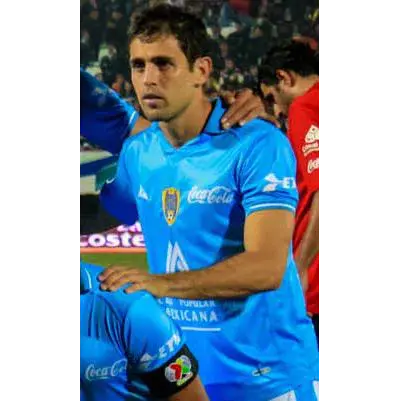
José Antonio Castro González is a former Mexican football player who last played as a defender for Atlético San Luis. He gained notoriety for his performances with Club América and at the 2006 FIFA World Cup for Mexico. He is often referred to by his nickname "El Gringo", given to him in his childhood because his parents are both Spanish, and his blue eyes.
