Andrew Jackson Quotes
It was as far as I could send him ..., where he could do the least harm. I would have sent him to the North Pole if we had kept a minister there.
Explaining why he appointed James Buchanan as Ambassador to Russia:
Andrew Jackson, 1767-1845, 7th President of the United States (Democrat, TN), Quoted in Conservative Digest, May 1987
Sourced by: Eigen's Political and Historical Quotations


She was tried by the Puritan religious and civil court for heresy. She started with Bible Study classes in her home and drew a substantial following. The clergy at the time were threatened and outraged. It was one thing for a woman to teach Bible Study to other women, but to also have men with the women was too much. The decision of the court was that she was banished from the colony. John Winthrop, Governor of the Massachusetts Bay Colony, presiding, answered: "Say no more. The Court knows wherefore, and is satisfied." See {584754}. In 1987, Massachusetts Governor Michael Dukakis pardoned Anne Hutchinson, revoking the order of banishment by Governor Winthrop 350 years earlier.

Christie was a Tory—a British supporter, but what he did that was so offensive was that he had requested that British Troops come to Maryland to control the rebellion.

Manava Dharma Shastra. The punishment for male adultery was not capital as in the Ancient Jewish and early Christian and Muslim law (Sharia) even today. However, if the adulterer had relations with the wife of a higher cast man, then the punishment was death. Even intercourse with an unmarried woman of a higher caste was punishable by death, but not so for relations with a woman of the same or lower caste. This text is a part of the Hindu Holy Texts. Hindus believe that Manu was a prophet whose text is revealed or inspired.


Because of his deep hostility to Austria, Bismarck was sent by the Prussian government to St. Petersburg, Russia, as ambassador. He complained that he was in exile:


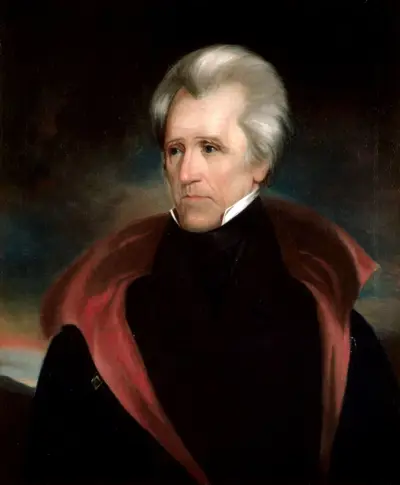
Andrew Jackson was an American lawyer, soldier, and statesman who served as the seventh president of the United States from 1829 to 1837. Before being elected to the presidency, Jackson gained fame as a general in the United States Army and served in both houses of the U.S. Congress. An expansionist president, Jackson sought to advance the rights of the "common man" against a "corrupt aristocracy" and to preserve the Union.
