Ambrose Bierce Quotes
In American politics, a person who having failed to secure an office from the people is given one on the condition he leave the country.
Ambrose Bierce, 1842-1914?, Journalist & Political Columnist, The Devil's Dictionary
Sourced by: Eigen's Political and Historical Quotations

Manava Dharma Shastra. This text is a part of the Hindu Holy Texts. Hindus believe that Mahu was a prophet whose text is revealed or inspired.


He had been offered a Cabinet position in Washington. He had been a respected judge in Ohio and was only tangentially involved with politics. What he did see of it he did not like. However, others pressed upon him his duty to help the country and he took the position. But he was never comfortable or even very skilled and the political end of Cabinet service but he was extremely skilled at the administrative and policy making aspect. Theodore Roosevelt personally selected him to be his successor and Roosevelt get him elected. Even when he was President, he rarely enjoyed it and was not very good at the political end of things which caused Roosevelt to be disappointed and then campaign against Taft’s second term.
This part of Taft’s Inaugural Address shocked the South and much of the North. But these were the days when the Republican Party was the liberal party on racial issues and the Democratic Party housed most racists and bigots. On this, the parties would flip flop after the Democrats passed the Civil Rights and Voting Rights Bill. Both Taft and TR were racial liberals and the South coalesced around Woodrow Wilson, an intellectual but an inveterate racist.


The English considered the new American diplomats very difficult to deal with and felt that gentlemanly English diplomats were ill suited to the task. He recommended:

Explaining why he appointed James Buchanan as Ambassador to Russia:


She had used a number of different designers for her wardrobe until she was criticized for having no consistent theme and look. It was decided that she should select one as her fashion consultant and she choose Cassini and had to tell the others that they were no longer needed. See {592752} for a John Adams related quote.


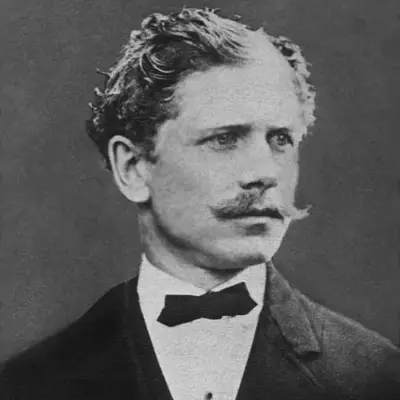
Ambrose Gwinnett Bierce was an American short story writer, journalist, poet, and Civil War veteran. His book The Devil's Dictionary was named as one of "The 100 Greatest Masterpieces of American Literature" by the American Revolution Bicentennial Administration. His story "An Occurrence at Owl Creek Bridge" has been described as "one of the most famous and frequently anthologized stories in American literature"; and his book Tales of Soldiers and Civilians (also published as In the Midst of Life) was named by the Grolier Club as one of the 100 most influential American books printed before 1900.
