Manu Quotes
Let him (the king) also appoint an ambassador who is versed in all sciences, who understands hints, expressions of the face and gestures, who is honest, skilful, and of noble family. Such an ambassador is commended to a king who is loyal, honest, skilful, possessing a good memory, who knows the proper place and time for action, who is handsome, fearless, and eloquent. For the ambassador alone makes kings' allies and separates allies; the ambassador transacts that business by which kings are disunited or not.
Manava Dharma Shastra. This text is a part of the Hindu Holy Texts. Hindus believe that Mahu was a prophet whose text is revealed or inspired.
Manu, ~ 500 BC, Hindu Teacher from India, Laws of Manu
Sourced by: Eigen's Political and Historical Quotations

Manava Dharma Shastra. This text is a part of the Hindu Holy Texts. Hindus believe that Manu was a prophet whose text is revealed or inspired.


Holland was then a Republic and federation of the separate states. Each elected representatives to the ruling legislature, however, many states had not been pleased that their representatives did not reflect the desires and public opinion in the individual states and in some cases took bribes to vote in favor of special interests. The Dutch did NOT want their representatives to use their own judgment but wanted them to seek and follow the instructions of the legislatures of each state.


Meiji the Great. This was a momentous event in Japanese history. This was the first time that the Japanese Emperor had appointed diplomats to conduct foreign affairs. Prior to that, Japan was so isolationist that at times Japanese who had any contact with Westerners would be executed. Then the Emperor had a reception for foreign diplomats. Never before in the history of the Empire had its divine head deigned to admit to his presence the despised foreigner. The Emperor was only in his second year of rule at the time.


The Arab culture, like most desert cultures, maintains a degree of hospitality that is much greater than that of most other cultures. Even enemies are granted hospitality. This sometimes confuses Western diplomats who might interpret the friendly hospitality as institutional friendship but it often is nothing more than the gracious hospitality that is expected in Arab society.


A reversal of Calusewitz's famous dictum--see {361616}


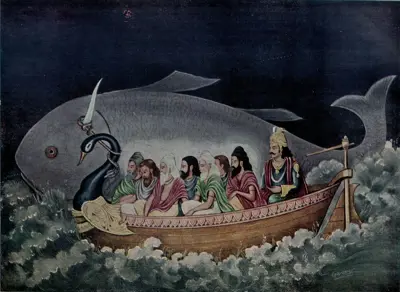
Manu (Sanskrit: मनु) is a term found with various meanings in Hinduism. In early texts, it refers to the archetypal man, or to the first man (progenitor of humanity). The Sanskrit term for 'human', मानव (IAST: mānava) means 'of Manu' or 'children of Manu'. In later texts, Manu is the title or name of fourteen mystical Kshatriya rulers of earth, or alternatively as the head of mythical dynasties that begin with each cyclic kalpa (aeon) when the universe is born anew. The title of the text Manusmriti uses this term as a prefix, but refers to the first Manu – Svayambhuva, the spiritual son of Brahma.
