Delilah L. Beasley Quotes
At the time the United States government acquired the territory of California from Mexico, slavery had been abolished there nearly twenty years
Delilah L. Beasley, 1872-1934, Journalist, Columnist & Historian, “Slavery in California,” Journal of Negro History, January 1918
Sourced by: Eigen's Political and Historical Quotations


as opposed to bringing slaves into the territory of California. There was a recognition that the institution of slavery corrupted the whole society. It therefore was preferable to use Chinese contract labor to diminish agricultural labor costs. If the price of admission to the union was to allow slavery, this paper and its readership would think it too high and would rather be independent.


The slavery issue was the dominant issue in pre-Civil War America. It even drove foreign policy.


The Baptist Churches of America were split asunder by the slavery issue. Wayland, who represented both the Northern abolitionist-leaning Baptist Churches and the Southern pro slavery churches, tried to forge a middle ground whereby slavery would end by the moral enlightenment of man and his love for fellow man as opposed to by legislation or economic pressure. He successfully predicted the outcome of the conflict except for one error he made. The conflict DID end slavery. The Baptist Church finally split into southern and northern wings in 1845. To this day, the Southern Church is extremely conservative, and fundamentalist; the Northern, very liberal and modern.


Secession of the South was not a new idea stimulated by the election of Abraham Lincoln. Fully 10 years before, there was this plan to form a Slave state union which would expand into Mexico and the Caribbean.

See {633926} for a quotation from the text that transmitted the resolution.

Washington was from Virginia, the largest of the slave states, and he himself owned slaves. In his will he emancipated all his slaves. Most of his fellow Southern Slave owners however not only disagreed about the abolition of slavery but were adamant that slavery spread so that the abolitionists never attain a majority.
The Mexican War was as controversial as any war in American History. President Polk ordered action independent of the Congress, In all of American History there have been two Congressional censures of American Presidents. This was one. See {594521} for the other.

He is often referred to as “of Lahore.” He was a much better theologian than a historian. His credit of Islam with the principles that would end slavery, ignored the fact that just as American founding fathers espoused equality and freedom yet some owned slaves, likewise Mohammed, the founder of Islam, was a slaveholder. Historically, long after most of the world had abolished slavery, it still existed in the Islamic nations. They were forced out of the African slave trade by the European powers in the 19th century. But slavery was legal in Saudi Arabia as late as the 1960s. Slavery was still practiced in Sudan in 2005 with Muslims attacking Christians and Animists and taking them as slaves despite the official laws banning such practices. The government itself aided the slavers. Also, although Islam is credited with a major assault on slavery, it was not slavery per se that Muhammad banned. It was the slavery of another Muslim. Sharia and the Koran allows slavery so long as the slave is an unbeliever.

Even before we had a Constitution there was major opposition to slavery. The “price” of the American Union was the acceptance of the slavery of the South. But the hypocrisy of a country based on liberty to allow and enforce slavery was not lost on the founding fathers. Ironically the abolitionists among the founding fathers were certain that they could persuade the Southern slaveholders of the error of slavery in a few years and things would be set right in the land. Even George Washington {630626}, and Thomas Jefferson and some other slaveowners at the time wished to see its abolition. Slaveholding Southern Founding Fathers in general were so wary of the abolitionists that they achieved structural, disproportionate, power in the new Constitution to ward off the abolitionists attempts to reform slavery.


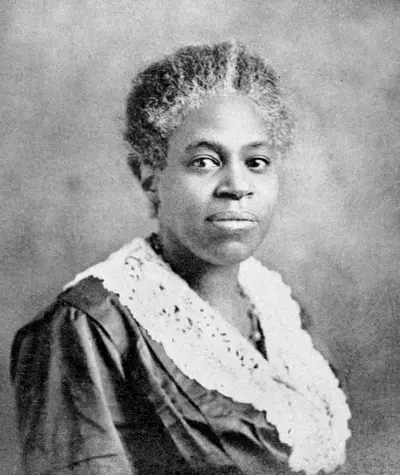
Delilah Leontium Beasley, was a historian and newspaper columnist for the Oakland Tribune in Oakland, California. Beasley was the first African-American woman to be published regularly in a major metropolitan newspaper. Beasley was also first to present written proof of the existence of California's black pioneers in her book Slavery in California (1918) and her classic, The Negro Trail-Blazers of California (1919). Her career in journalism spanned more than 50 years. She detailed the racial problems in California and the heroic achievements by Blacks to overcome them during the late 19th century and early 20th century.
