Klemens von Metternich Quotes
No student who shall be expelled from a university by a decision of the university senate which was ratified or prompted by the agent of the government, or who shall have left the institution in order to escape expulsion, shall be received in any other university... .
Metternich called a conference of the heads of all the German states to deal with what they perceived as a dangerous liberalism enveloping German society. Metternich did not personally draft all the resolutions but he controlled the conclave and all the resolutions which are usually ascribed to him.
Klemens von Metternich, 1773-1859, Austrian Statesman & Diplomat, Carlsbad Resolutions, August 1819
Sourced by: Eigen's Political and Historical Quotations

The University of Wisconsin had a radical faculty member who claimed that the 9-11 attack was the fault of Vice President Cheney and other absurd claims that were supportive of the Muslim Terrorists. Many called for the firing of the faculty member who had academic tenure. The University decided that college students were not going to be fooled or seduced by such absurd statements and that while in this case the statement were controversial and absurd, what would happen when a faculty statement was just controversial. The University agreed with almost all of the other great universities in America with the fact that the risk of a foolish pedant like this is very tiny in contrast to the risk of allowing officials—-academic or political---to to determine what a professor can say. This freedom has made the American University system the envy of the entire world.


In 1873 there was a national debate of a proposal to create a government endowed and operated "National University:"

Metternich called a conference of the heads of all the German states to deal with what they perceived as a dangerous liberalism enveloping German society. Metternich did not personally draft all the resolutions but he controlled the conclave and all the resolutions which are usually ascribed to him.


While this quotation seems bizarre to us in modern America, there was some historical truth of this in Europe. Before political parties, the Church was the dominant political force, and no professor could be appointed whose views did not coincide with those of the church. Later political parties in many parts of Europe did concern themselves with the views of professors. However, America with its strong tradition of private universities built state public universities in the mold of Harvard, Yale, Brown, Columbia and Princeton where national and local politics were not major factors of appointment and retention of professors. Today it is very rare when a state legislature or government allows politics to become a factor in appointments of professors. The University of Virginia is the most dramatic exception where governors of the state serve for 2 years and when a new governor takes office, he replaces all the trustees and the University. These then have allowed politics to become a major factor in some dramatic cases. And the Federal Universities—the military service academies—do allow political views to encroach on the faculty appointment and retention decisions. However, this is rarely partisan in the sense of Democrat or Republican. But Professors who hold views contrary to BOTH political parties are rare.

Hypertrophy means: exaggerated or unnecessary growth or complexity


Hobson, like Mark Twain in America, was a major critic of imperialism.

Congress was at the time considering the possibility of a National University. Dr. Eliot was one of the national leaders to kill the idea using oratory like this. Not the extreme sarcasm of the last sentence. At the time Congress was notorious for its conditioning appointments on almost any variable except merit.

Horowitz who preaches against tenure and academic freedom gives his opponents wonderful ammunition to support the concepts. His definition of “idiot” is people who have what he believes is a naïve liberal view of politics whom he argues should not be paid to speak, write and possibly indoctrinate students. So a mathematics professor, teaching algebraic topology, but supports Hezbollah for example should be purged from his job. It is just that point of view that was responsible for having tenure and academic freedom in universities in the first place.


The institution to which he was referring was the University of Virginia which Jefferson founded. This letter shows Jefferson’s personal antipathy to the theologians of the day. It is uncharacteristically not as tolerant as most of us would associate with Jefferson. However, by this time in his career, he had become used to being the major political enemy of most orthodox clerics. He didn’t want them in his beloved university.

This was the first state university in Europe.

The “New” system had reformed very slowly {41427} and then had been spurred by Congress passing the Morrill Act which established land grant colleges in each state provided they taught practical things as well. President Buchanan twice vetoed the act as Southern states preferred the “old” style. But in 1862 it passed again and in one of the great American reforms in the midst of the Civil War, most of our great State Universities got their starts when Lincoln signed the act.

Everett was to become the President of Harvard. Private universities had been established by a single religion and typically had professorships of clergy of their religion, but when public universities were contemplated, new thinking was needed in the light of the American Constitution. Madison’s suggested solution is the one that America pursued. Separate the theological seminaries from the public universities.

Rulers & Government have been worried by what goes on at universities and colleges for a long time.


McCarthy accused thousands of people of being communists and disloyal. He claimed to have lists of communists in universities, the Army and other agencies of government, but never produced such lists. In addition to being a overbearing demagogue, he suffered (and died from) from a serious case of alcoholism. McCarthy’s false and irresponsible attacks eventually caused the Senate to censure him. That and his drinking destroyed his career. Not a single person “exposed” by McCarthy was ever convicted of anything. Many had their careers destroyed however. A number of universities fired Professors because at an earlier phase of their careers, they had been a member of an organization that was communist or affiliated with communists, and then left. These firings led to intensive efforts to strengthen the rules of tenure and academic freedom so that the McCarthy abuses could never be repeated. McCarthy could not be sued for his defamatory lies as he always made his accusations from the floor of the Senate where there is absolute protection even for malicious and irresponsible statements.

Santorum’s view was not quite as absurd as this quotation would indicate. His concern was that he believed that colleges and universities were dominated by left wing, liberal faculty, who indoctrinate the students and turn them into Democrats or liberal Republicans. This he thought was bad for the country. The view is not complete paranoia. Higher Education is rarely indoctrination in America. Virtually every school has some politically conservative faculty as well as faculty who are in the political left and some are apolitical. However most of the good schools are liberal in the traditional meaning of the word and as it has been used in Europe and initially in the United States. This liberal tradition is characterized by openness to all ideas and points of view including those that the government or other institutions of society are sometimes uncomfortable with. This intellectual tolerance makes some ultraconservatives uncomfortable. However, other political conservatives are very “liberal” in the intellectual sense including most of the great conservative writers and philosophers and economists of the last centuries. There are people of all political and religious persuasions in most societies who are concerned that the ideas young people might be exposed to are harmful to them and detrimental to society. Most have more faith in young people and see the major role of education is to expose the student to new and different ideas for the student to consider. Santorum is one of the former; all his Republican opponents were of the other point of view.
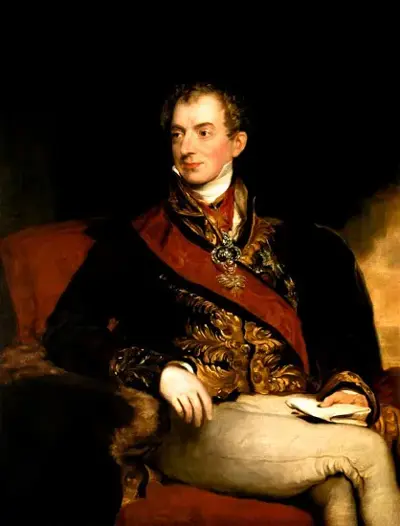
Klemens Wenzel Nepomuk Lothar, Prince of Metternich-Winneburg zu Beilstein, was an Austrian diplomat who was at the center of European affairs for three decades as the Austrian Empire's foreign minister from 1809 and Chancellor from 1821 until the liberal Revolutions of 1848 forced his resignation.
