John W. Burgess Quotes
The partisanship which, as a rule, dominates all appointments here renders any governmental agent unfit to tamper with ... [universities], for partisanship seeks to manipulate every thing for personal or party advantage and does nothing, intentionally, for such abstractions as civilization and culture.
In 1873 there was a national debate of a proposal to create a government endowed and operated "National University:"
John W. Burgess, 1844-1931, Political Scientist and Civil Service Reformer, The American University: When Shall It Be? Where Shall It Be? What Shall It Be?, 1884
Sourced by: Eigen's Political and Historical Quotations


Congress was at the time considering the possibility of a National University. Dr. Eliot was one of the national leaders to kill the idea using oratory like this. Not the extreme sarcasm of the last sentence. At the time Congress was notorious for its conditioning appointments on almost any variable except merit.


While this quotation seems bizarre to us in modern America, there was some historical truth of this in Europe. Before political parties, the Church was the dominant political force, and no professor could be appointed whose views did not coincide with those of the church. Later political parties in many parts of Europe did concern themselves with the views of professors. However, America with its strong tradition of private universities built state public universities in the mold of Harvard, Yale, Brown, Columbia and Princeton where national and local politics were not major factors of appointment and retention of professors. Today it is very rare when a state legislature or government allows politics to become a factor in appointments of professors. The University of Virginia is the most dramatic exception where governors of the state serve for 2 years and when a new governor takes office, he replaces all the trustees and the University. These then have allowed politics to become a major factor in some dramatic cases. And the Federal Universities—the military service academies—do allow political views to encroach on the faculty appointment and retention decisions. However, this is rarely partisan in the sense of Democrat or Republican. But Professors who hold views contrary to BOTH political parties are rare.


Metternich called a conference of the heads of all the German states to deal with what they perceived as a dangerous liberalism enveloping German society. Metternich did not personally draft all the resolutions but he controlled the conclave and all the resolutions which are usually ascribed to him.


Note that early constitutional experts assumed that one of the President’s roles was to be non partisan and control partisanship. Note the phrase ‘prevent the artifices of party’. The early founders were very wary of political parties of ‘factions’ as Madison called them. However, most were extremely partisan although in the Presidency partisanship was toned down by George Washington but after him, partisan ship became the norm.


The prime minister had suggested that the Queen make a State Visit to Ireland. However, such an event would dominate the press and be advantageous to the majority party which was under public criticism for other matters. Queen Victoria did not want State visits or other events involving the crown to be used by the party in power as it might make the Irish feel the visit was not sincere and was simply undertaken for partisan political advantage. However, Victoria did want to try and improve relations with Ireland and suggested a visit later. She was also concerned that some right wingers of the majority party would claim that the reason she was not making the visit was for fear of adverse Irish reaction. There were constant difficulties regarding the degree of Irish autonomy and this was always a potential risk. However, the Queen would not let her position be used for political advantage and postponed the visit. This should be contrasted with the American system where the President is both head of state and head of government and often will undertake a state function for partisan advantage. There is often criticism from the other party, who would prefer the non partisanship of the English crown—until their party wins the Presidency at which time, they too use state functions for political advantage.

This is a fascinating quotation in that it was true in Hayes’ tenure and at other times in American History, but at other times it was not at all the case. Two notable examples were the administrations of Thomas Jefferson and those of George W. Bush. Voters claim to not like partisanship but in many eras they do not punish the majority for their lack of bipartisanship.


This quotation is important because in the early 21st century a few conservatives accused American universities of discriminating against conservatives and people with conservative views. They found a few egregious instances and generalized from those, however universities are among the most tolerant environments in American life. Previous surveys showed that the discrimination was minimal like this one, but the survey included liberal professors who might have been insensitive to the effect. But this study, surveyed only the professors who described themselves as Republicans.
Hypertrophy means: exaggerated or unnecessary growth or complexity


Explaining the reason for recruiting 18 year olds as FBI informers and infiltrators


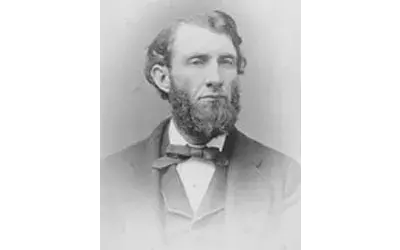
John William Burgess was a pioneering American political scientist. He spent most of his career at Columbia University and is regarded as having been "the most influential political scientist of the period."
