Queen Victoria Quotes
It is a journey which must one day or other be undertaken, and which the Queen would be glad to have accomplished, because it must be disagreeable to her that people should speculate whether she dare visit one part of her dominions. Much will depend on the proper moment, for, after those speculations, it ought to succeed if undertaken. The Queen is anxious that when undertaken it should be a National thing, and the good which it is to do must be a permanent and not a transitory advantage to a particular Government, having the appearance of a party move
The prime minister had suggested that the Queen make a State Visit to Ireland. However, such an event would dominate the press and be advantageous to the majority party which was under public criticism for other matters. Queen Victoria did not want State visits or other events involving the crown to be used by the party in power as it might make the Irish feel the visit was not sincere and was simply undertaken for partisan political advantage. However, Victoria did want to try and improve relations with Ireland and suggested a visit later. She was also concerned that some right wingers of the majority party would claim that the reason she was not making the visit was for fear of adverse Irish reaction. There were constant difficulties regarding the degree of Irish autonomy and this was always a potential risk. However, the Queen would not let her position be used for political advantage and postponed the visit. This should be contrasted with the American system where the President is both head of state and head of government and often will undertake a state function for partisan advantage. There is often criticism from the other party, who would prefer the non partisanship of the English crown—until their party wins the Presidency at which time, they too use state functions for political advantage.
Victoria Alexandrina, 1819-1901, [Queen Victoria], Queen of Great Britain and Ireland & Empress of India, Letter to her Prime Minister, John Russell, August 3, 1846
Sourced by: Eigen's Political and Historical Quotations


The Queen assented but warned that members of the Royal Family should stay away from Party Politics.

This is a fascinating quotation in that it was true in Hayes’ tenure and at other times in American History, but at other times it was not at all the case. Two notable examples were the administrations of Thomas Jefferson and those of George W. Bush. Voters claim to not like partisanship but in many eras they do not punish the majority for their lack of bipartisanship.


Despite his fears, that is exactly what happened. Ironically, he himself was the focus of much dissatisfaction with the administration, and the Federalists led by Adams and the Democratic Republicans led by Jefferson opposed each other, ousting Adams.

The British Conservative Party was attacking the Liberal government for not dealing with the threat of German air power in the form of Zeppelins flying to England. The Germans were outraged at such freedom of the press at their expense. See {609907}.

In 1873 there was a national debate of a proposal to create a government endowed and operated "National University:"


Essentially Trollope claimed that English political parties are by their very nature, conservative, in the sense that they tend to resist great change. This has tended to be true in America and other democracies, but there are a number of exceptions. Where political parties are totally unsuccessful, they have little to lose. Likewise, when a political party becomes overwhelmingly dominant, it tends to overreach and try and make ideological change. However when there is true contest among the parties, they tend to be conservative in the sense that even if they are liberal parties, they do not move in extreme ways.


He assumed the speakership at a time of bitter partisanship in Congress and the country much like the beginning of the 31st century. Randall, however put a stop to much of it in the House of Representatives.

Most Americans who felt this way about the 2011 Congress playing “chicken” with the full faith and credit of the United States did not realize that although 2011 had reached a new low, the problem has existed throughout the republic’s existence. Here Ms. Roosevelt complained about the same thing.

His description of the extreme partisanship in England at the time could just as easily describe the American political polarization of 2012—85 years later.

After 34 years of serving as one of the most effective Senators, he had just been defeated in his primary election by a hyper partisan Republican conservative extremist who attacked Lugar for his comity and bipartisanship.

DeLay had been forced to resign from his leadership position when he was criminally indicted. Months later after his former aids admitted criminal activity, he resigned from the Congress but claimed innocence. Then he was convicted. Always an extreme partisan, he was firm in his disdain for Democrats and bipartisanship or compromise of any kind.

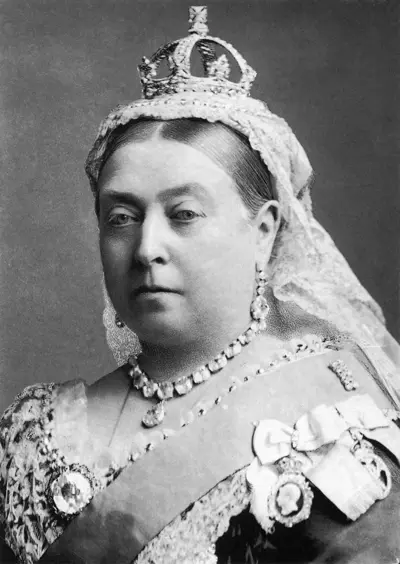
Victoria was Queen of the United Kingdom of Great Britain and Ireland from 20 June 1837 until her death in 1901. Known as the Victorian era, her reign of 63 years and seven months was the longest of any British monarch until surpassed by that of Elizabeth II. It was a period of industrial, political, scientific, and military change within the United Kingdom, and was marked by a great expansion of the British Empire. In 1876, Parliament voted to grant her the additional title of Empress of India.
