Edmund Burke Quotes
Party divisions, whether on the whole operating for good or evil, are things inseparable from free government.
Edmund Burke, 1729-1797, Irish Orator & Member of the British Parliament, Observations on a Publication, "The Present State of a Nation," 1769
Sourced by: Eigen's Political and Historical Quotations

Early political philosophers were very concerned about the conflicts that would be engendered in society by political parties. Many of the Founding Fathers had similar suspicions.

There were many in England and America who thought that political parties or “factions” as the Americans called them were inimical to republican government. Smyth disagreed and thought parties necessary for freedom and democracy. Turkey at the time was an Islamic Empire that while in decline still controlled large parts of Europe and most of North Africa. However, the Sultan had absolute control over both “church and state”. He was like the Pope and the Holy Roman Emperor in one person, There was no freedom of thought or speech.


Despite his fears, that is exactly what happened. Ironically, he himself was the focus of much dissatisfaction with the administration, and the Federalists led by Adams and the Democratic Republicans led by Jefferson opposed each other, ousting Adams.

At the time the Republican party was a minor, third party and Douglas was disparaging that. While Douglas' general point has held true, the Republicans supplanted the Whigs as the second major party shortly thereafter.

See Edmund Burke a similar phrase 12 years earlier.


Essentially Trollope claimed that English political parties are by their very nature, conservative, in the sense that they tend to resist great change. This has tended to be true in America and other democracies, but there are a number of exceptions. Where political parties are totally unsuccessful, they have little to lose. Likewise, when a political party becomes overwhelmingly dominant, it tends to overreach and try and make ideological change. However when there is true contest among the parties, they tend to be conservative in the sense that even if they are liberal parties, they do not move in extreme ways.

DeLay had been forced to resign from his leadership position when he was criminally indicted. Months later after his former aids admitted criminal activity, he resigned from the Congress but claimed innocence. Then he was convicted. Always an extreme partisan, he was firm in his disdain for Democrats and bipartisanship or compromise of any kind.


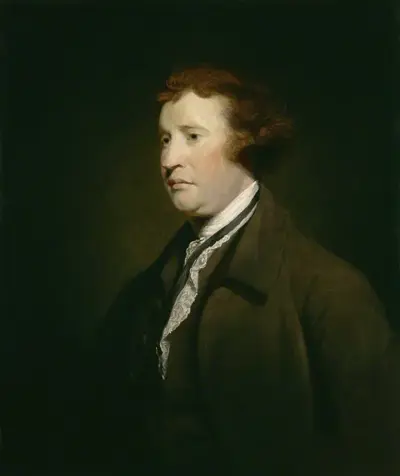
Edmund Burke was an Irish statesman, economist, and philosopher. Born in Dublin, Burke served as a member of parliament (MP) between 1766 and 1794 in the House of Commons of Great Britain with the Whig Party after moving to London in 1750.
