Charles William Eliot Quotes
We have not entire faith in the trust that Congress has in the unchangeableness of the laws of arithmetic. We might think that their competency to select a professor of history might be doubted. They seem to have an impression that there is such a thing as" American" political economy, which can no more be than "American" chemistry or "American" physics. Finally, gentlemen, we should a little distrust the selection by Congress of a professor of ethics. Of course, we should feel no doubt in regard to the tenure of office of the professors being entirely suitable, it being the well-known practice of both branches of Congress to select men solely for fitness, without regard to locality, and to keep them in office as long as they are competent and faithful.
Congress was at the time considering the possibility of a National University. Dr. Eliot was one of the national leaders to kill the idea using oratory like this. Not the extreme sarcasm of the last sentence. At the time Congress was notorious for its conditioning appointments on almost any variable except merit.
Charles W. Eliot, 1834-1926, President, Harvard University, Speech to the New England Society, New York City, December 22, 1877
Sourced by: Eigen's Political and Historical Quotations

In 1873 there was a national debate of a proposal to create a government endowed and operated "National University:"


While this quotation seems bizarre to us in modern America, there was some historical truth of this in Europe. Before political parties, the Church was the dominant political force, and no professor could be appointed whose views did not coincide with those of the church. Later political parties in many parts of Europe did concern themselves with the views of professors. However, America with its strong tradition of private universities built state public universities in the mold of Harvard, Yale, Brown, Columbia and Princeton where national and local politics were not major factors of appointment and retention of professors. Today it is very rare when a state legislature or government allows politics to become a factor in appointments of professors. The University of Virginia is the most dramatic exception where governors of the state serve for 2 years and when a new governor takes office, he replaces all the trustees and the University. These then have allowed politics to become a major factor in some dramatic cases. And the Federal Universities—the military service academies—do allow political views to encroach on the faculty appointment and retention decisions. However, this is rarely partisan in the sense of Democrat or Republican. But Professors who hold views contrary to BOTH political parties are rare.

His larger point was that history is full of erroneous facts for a variety of reasons, and even though a particular historian tries to limit his views to the truth, it is not always possible to know the truth and to assess each claimed fact. Also, as in the sciences, new tools and techniques give us new knowledge and what was ‘true’ yesterday, is often not quite true today or tomorrow.


She is the first Hindu woman who ever became a pundit—a religious expert who guides Hindus. She is also a professor in the United States.


Gallatin was complaining about requirements of Congress, with which he and Madison disagreed but were not powerful enough to stop.
implicit in the weak ethics rules of the U.S. House of Representatives

Adams and Benjamin Franklin served as Ministers to France to obtain assistance for the Revolution. Franklin was masterly successful in arranging French economic and military assistance. Adams however was not. He was very uncomfortable in Paris and the sexuality was particularly distressing to him. Franklin, in contrast, not only was not distressed but was a favorite amongst French ladies even at his advanced age.
While the George W. Bush administration polarized the civil service by appointing ideological zealots without regard to competence and qualifications, Conservative Australian Prime Minister John Howard, had actually done the same thing before him.

This quotation is important because in the early 21st century a few conservatives accused American universities of discriminating against conservatives and people with conservative views. They found a few egregious instances and generalized from those, however universities are among the most tolerant environments in American life. Previous surveys showed that the discrimination was minimal like this one, but the survey included liberal professors who might have been insensitive to the effect. But this study, surveyed only the professors who described themselves as Republicans.

2nd Baronet Peel. He was then the Chief Secretary of Ireland and only 26 years of age. Patronage jobs, cronyism, and corruption was then extreme in Irish politics.

Explaining the reason for recruiting 18 year olds as FBI informers and infiltrators


Horowitz who preaches against tenure and academic freedom gives his opponents wonderful ammunition to support the concepts. His definition of “idiot” is people who have what he believes is a naïve liberal view of politics whom he argues should not be paid to speak, write and possibly indoctrinate students. So a mathematics professor, teaching algebraic topology, but supports Hezbollah for example should be purged from his job. It is just that point of view that was responsible for having tenure and academic freedom in universities in the first place.
She was referring to scientists who might have personal moral judgments regarding a scientific issue like embryos, stem cells, and abortion or animal experiments that are different from that of the government at the time, might have their job threatened if they refused to personally perform a procedure that was offensive to them.
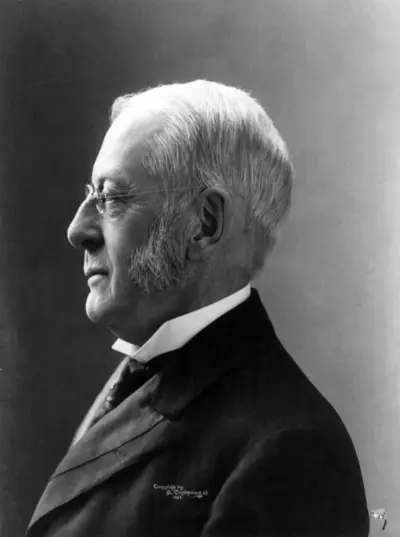
Charles William Eliot was an American academic who was selected as Harvard's president in 1869. A member of the prominent Eliot family of Boston, he transformed the provincial college into the pre-eminent American research university. Eliot served until 1909, having the longest term as president in the university's history.
