W. Mark Felt Quotes
By the time they are 21 years of age they are almost ready to leave college and have been subjected to the corrosive influence and brainwashing of ultra-liberal and radical professors.
Explaining the reason for recruiting 18 year olds as FBI informers and infiltrators
W. Mark Felt, 1913–2008, FBI Deputy Director, "Deep Throat" from Watergate, September 1970
Sourced by: Eigen's Political and Historical Quotations

From the earliest European universities, the conservative elements of the society has always felt that the universities were hotbeds of liberalism. Generally, the more education anyone obtains, the less he/she is susceptible to doctrine and control by others. However, far from liberal indoctrination, the leading conservative—including those like Santorum who castigate the universities, are themselves the products of the so called “indoctrination”. Generally, conservatives have tended to use the instruments of government and the access to wealth to control and shape the range of the political dialogue. In most societies, the University is a place where there is a much broader range of points of view available. In many nations today, the universities are censored, suspected, controlled by the establishment of the society to avoid rapid change which by definition, conservatives oppose.

Horowitz who preaches against tenure and academic freedom gives his opponents wonderful ammunition to support the concepts. His definition of “idiot” is people who have what he believes is a naïve liberal view of politics whom he argues should not be paid to speak, write and possibly indoctrinate students. So a mathematics professor, teaching algebraic topology, but supports Hezbollah for example should be purged from his job. It is just that point of view that was responsible for having tenure and academic freedom in universities in the first place.


McCarthy accused thousands of people of being communists and disloyal. He claimed to have lists of communists in universities, the Army and other agencies of government, but never produced such lists. In addition to being a overbearing demagogue, he suffered (and died from) from a serious case of alcoholism. McCarthy’s false and irresponsible attacks eventually caused the Senate to censure him. That and his drinking destroyed his career. Not a single person “exposed” by McCarthy was ever convicted of anything. Many had their careers destroyed however. A number of universities fired Professors because at an earlier phase of their careers, they had been a member of an organization that was communist or affiliated with communists, and then left. These firings led to intensive efforts to strengthen the rules of tenure and academic freedom so that the McCarthy abuses could never be repeated. McCarthy could not be sued for his defamatory lies as he always made his accusations from the floor of the Senate where there is absolute protection even for malicious and irresponsible statements.
Santorum’s view was not quite as absurd as this quotation would indicate. His concern was that he believed that colleges and universities were dominated by left wing, liberal faculty, who indoctrinate the students and turn them into Democrats or liberal Republicans. This he thought was bad for the country. The view is not complete paranoia. Higher Education is rarely indoctrination in America. Virtually every school has some politically conservative faculty as well as faculty who are in the political left and some are apolitical. However most of the good schools are liberal in the traditional meaning of the word and as it has been used in Europe and initially in the United States. This liberal tradition is characterized by openness to all ideas and points of view including those that the government or other institutions of society are sometimes uncomfortable with. This intellectual tolerance makes some ultraconservatives uncomfortable. However, other political conservatives are very “liberal” in the intellectual sense including most of the great conservative writers and philosophers and economists of the last centuries. There are people of all political and religious persuasions in most societies who are concerned that the ideas young people might be exposed to are harmful to them and detrimental to society. Most have more faith in young people and see the major role of education is to expose the student to new and different ideas for the student to consider. Santorum is one of the former; all his Republican opponents were of the other point of view.

This quotation is important because in the early 21st century a few conservatives accused American universities of discriminating against conservatives and people with conservative views. They found a few egregious instances and generalized from those, however universities are among the most tolerant environments in American life. Previous surveys showed that the discrimination was minimal like this one, but the survey included liberal professors who might have been insensitive to the effect. But this study, surveyed only the professors who described themselves as Republicans.
This may be one of the most anti-intellectual, anti educational statements made in the history of American campaigns. Santorum was one of 9 Republicans seeking the 2012 Presidential nomination. He was a favorite of the radical religious right which was an important constituency of the Republican Party at that time. The 9 candidates tried to outdo each other in how they could attack President Barack Obama, then running for a second term. While Obama had a very large percentage of Americans who “liked him” even when they disagreed with his policies, the right wing base of Republicans literally hated the man and would see evil in anything Obama did or said. One of the main positions of the President had been making college affordable for every American young person. Normally, this would be approved by almost all citizens and voters. However, this quotation illustrated the degree of hatred and paranoia. The audience, instead of laughing at the absurdity of Santorum’s accusation, roared its approval. There were not enough Republicans who shared the same degree of Paranoia about Obama, and Santorum was not elected as the nominee. There has always been in America a fundamentalist religious minority who feared college and higher eductation as not adhereing to the literal reading of The Bible, even when the colleges were Christian religious institutions which the early Ivy League colleges were: Brown, Yale, Princeton, Harvard and Columbia. As these schools have become secular, some religious fundamentalists opposed sending their children to them and saw the institutions in a negative light. Santorum’s constituency included those Americans.
Wriston was one of the few college presidents who would publicly acknowledge that an college education was not necessarily coupled with a college degree. If students performed all their requirements they would get a degree. However, to get an education there was much more involved and there were some college graduates who were really not very well educated.


While this quotation seems bizarre to us in modern America, there was some historical truth of this in Europe. Before political parties, the Church was the dominant political force, and no professor could be appointed whose views did not coincide with those of the church. Later political parties in many parts of Europe did concern themselves with the views of professors. However, America with its strong tradition of private universities built state public universities in the mold of Harvard, Yale, Brown, Columbia and Princeton where national and local politics were not major factors of appointment and retention of professors. Today it is very rare when a state legislature or government allows politics to become a factor in appointments of professors. The University of Virginia is the most dramatic exception where governors of the state serve for 2 years and when a new governor takes office, he replaces all the trustees and the University. These then have allowed politics to become a major factor in some dramatic cases. And the Federal Universities—the military service academies—do allow political views to encroach on the faculty appointment and retention decisions. However, this is rarely partisan in the sense of Democrat or Republican. But Professors who hold views contrary to BOTH political parties are rare.

At the time a department store was considered a large but mediocre retail establishment with a tendency to try and sell everything rather than specialize in one or two areas like the finest shops. Flexner observed that the American universities were then very broad but we’re not centers of intellectual excellence. The result was that he established the Institute for Advanced Study at Princeton. See {634254}.
Hypertrophy means: exaggerated or unnecessary growth or complexity

The President with Secretary of State, Thomas Jefferson, and several members of Congress, came to Brown to get ideas of how colleges should operate as there were very few colleges in America, and more were needed. Note the classic language of political flattery. Washington was really polished as “retail” politician as this quotation demonstrates.
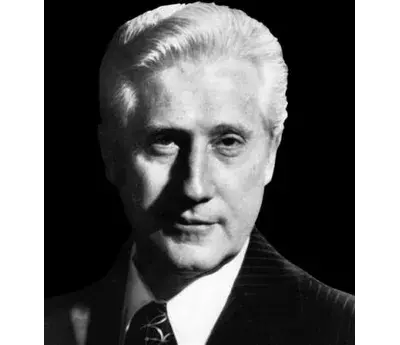
William Mark Felt Sr. was an American law enforcement officer who worked for the Federal Bureau of Investigation (FBI) from 1942 to 1973 and was known for his role in the Watergate scandal. Felt was an FBI special agent who eventually rose to the position of Associate Director, the Bureau's second-highest-ranking post. Felt worked in several FBI field offices prior to his promotion to the Bureau's headquarters. In 1980 he was convicted of having violated the civil rights of people thought to be associated with members of the Weather Underground, by ordering FBI agents to break into their homes and search the premises as part of an attempt to prevent bombings. He was ordered to pay a fine, but was pardoned by President Ronald Reagan during his appeal.
