Klemens von Metternich Quotes
A special representative of the ruler of each state shall be appointed for each university, with appropriate instructions and extended powers .... The function of this agent shall be to see to the strictest enforcement of existing laws and disciplinary regulations; to observe carefully the spirit which is shown by the instructors in the university in their public lectures and regular courses, and, without directly interfering in scientific matters or in the methods of teaching, to give a salutary direction to the instruction, having in view the future attitude of the students. Lastly, he shall devote unceasing attention to everything that may promote morality, good order, and outward propriety among the students.... The confederated governments mutually pledge themselves to remove from the universities or other public educational institutions all teachers who, by obvious deviation from their duty, or by exceeding the limits of their functions, or by the abuse of their legitimate influence over the youthful minds, or by propagating harmful doctrines hostile to public order or subversive of existing governmental institutions, shall have unmistakably proved their unfitness for the important office entrusted to them... .
Metternich called a conference of the heads of all the German states to deal with what they perceived as a dangerous liberalism enveloping German society. Metternich did not personally draft all the resolutions but he controlled the conclave and all the resolutions which are usually ascribed to him.
Klemens von Metternich, 1773-1859, Austrian Statesman & Diplomat, Carlsbad Resolutions, August 1819
Sourced by: Eigen's Political and Historical Quotations

Horowitz who preaches against tenure and academic freedom gives his opponents wonderful ammunition to support the concepts. His definition of “idiot” is people who have what he believes is a naïve liberal view of politics whom he argues should not be paid to speak, write and possibly indoctrinate students. So a mathematics professor, teaching algebraic topology, but supports Hezbollah for example should be purged from his job. It is just that point of view that was responsible for having tenure and academic freedom in universities in the first place.


Metternich called a conference of the heads of all the German states to deal with what they perceived as a dangerous liberalism enveloping German society. Metternich did not personally draft all the resolutions but he controlled the conclave and all the resolutions which are usually ascribed to him.


The madness of Nazism was getting established in Germany. One of the first thing that dictatorships do when they want to take total control is to hobble, censor, intimidate or eliminate the press. Thompson was one of the first jouralists to warn about Adolph Htler. She was expelled from Germany for her “unflattering” way of describing Hitler.

Spinoza’s ideas were considered so radical and dangerous that he was the only man in history who was excommunicated by the Catholics, the Jews and the Muslims. However, we see in Spinoza the observations and foundations of what would become American and then international views of human rights.

Santorum’s view was not quite as absurd as this quotation would indicate. His concern was that he believed that colleges and universities were dominated by left wing, liberal faculty, who indoctrinate the students and turn them into Democrats or liberal Republicans. This he thought was bad for the country. The view is not complete paranoia. Higher Education is rarely indoctrination in America. Virtually every school has some politically conservative faculty as well as faculty who are in the political left and some are apolitical. However most of the good schools are liberal in the traditional meaning of the word and as it has been used in Europe and initially in the United States. This liberal tradition is characterized by openness to all ideas and points of view including those that the government or other institutions of society are sometimes uncomfortable with. This intellectual tolerance makes some ultraconservatives uncomfortable. However, other political conservatives are very “liberal” in the intellectual sense including most of the great conservative writers and philosophers and economists of the last centuries. There are people of all political and religious persuasions in most societies who are concerned that the ideas young people might be exposed to are harmful to them and detrimental to society. Most have more faith in young people and see the major role of education is to expose the student to new and different ideas for the student to consider. Santorum is one of the former; all his Republican opponents were of the other point of view.

This quotation is typical of many constitutions in the sense that one part of the Constitution guarantees political freedom for all citizens and another part then makes so many exceptions that there are no guaranteed rights other than those the government wishes to give at any point of time. In this particular Constitution Article 10 does both, one right after the other. So Clause 1 gives the rights and Clause 2 explains how they can be taken away. For example, in 2008 university students were not allowed to join political parties.


This was the first state sponsored university in Europe.
Metternich called a conference of the heads of all the German states to deal with what they perceived as a dangerous liberalism enveloping German society. Metternich did not personally draft all the resolutions but he controlled the conclave and all the resolutions which are usually ascribed to him.


The important thing about rights is that they exist independent of majority opinion. The majority might want to trample the rights of an unpopular group or individual. Very often Islamic modernists like Serageldin are many among the educated Muslims but the majority views are often drowned out by the violence and extremist statements of the fundamentalists.

While this quotation seems bizarre to us in modern America, there was some historical truth of this in Europe. Before political parties, the Church was the dominant political force, and no professor could be appointed whose views did not coincide with those of the church. Later political parties in many parts of Europe did concern themselves with the views of professors. However, America with its strong tradition of private universities built state public universities in the mold of Harvard, Yale, Brown, Columbia and Princeton where national and local politics were not major factors of appointment and retention of professors. Today it is very rare when a state legislature or government allows politics to become a factor in appointments of professors. The University of Virginia is the most dramatic exception where governors of the state serve for 2 years and when a new governor takes office, he replaces all the trustees and the University. These then have allowed politics to become a major factor in some dramatic cases. And the Federal Universities—the military service academies—do allow political views to encroach on the faculty appointment and retention decisions. However, this is rarely partisan in the sense of Democrat or Republican. But Professors who hold views contrary to BOTH political parties are rare.


He was a rabid anti-teacher fanatic. Teachers on most schools sustems are entitled to due process, a reaction aginst the past times when teachers were fired for not supporting the political party in power or other things having nothing to do with education. This due process is interpreted by some to mean that teachers cannot be fired. This is an exaggeration. There is no school district in the United States where a teacher cannot be fired for directly harming children. However, under most school system rules, teachers cannot be fired because their students do not learn the curriculum. This does “screw up chldren’s lives”. Whether or not a student learns involves too many factors other than the teacher to hold teachers responsible. In most school ditricts, the teachers do not choose the curriculum, and are given the textbooks and instructional materials which they must use even if they think better ones are avaialbe. Some children have learning difficulties and others are not motivated at all. Some parents are not supportive of the school, and some children lead such stressful lives that learning is very difficult.
The President with Secretary of State, Thomas Jefferson, and several members of Congress, came to Brown to get ideas of how colleges should operate as there were very few colleges in America, and more were needed. Note the classic language of political flattery. Washington was really polished as “retail” politician as this quotation demonstrates.

She was dealing with a serious campus situation where an invited speaker, Chief of Police Kelly of New York City was prevented from giving his p resentation on the controversial “Stop and Frisk” rules by student protesters who opposed the practice. Brown’s tradition of hearing anyone on the campus regardless of point of view had been broken to the distress of most students, faculty and alumni.

The English law was, for many years, not taught in English Universities.
This was the first state university in Europe.
This was the first state university in Europe.
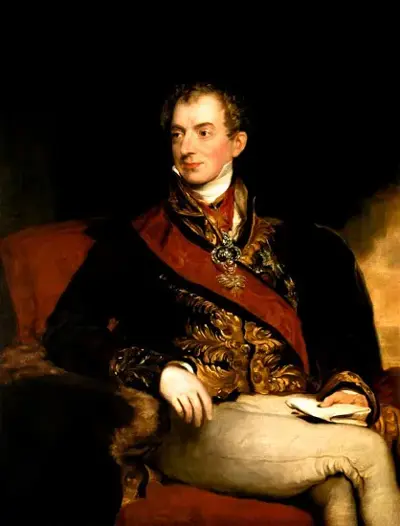
Klemens Wenzel Nepomuk Lothar, Prince of Metternich-Winneburg zu Beilstein, was an Austrian diplomat who was at the center of European affairs for three decades as the Austrian Empire's foreign minister from 1809 and Chancellor from 1821 until the liberal Revolutions of 1848 forced his resignation.
