John Sexton Quotes
Universities are good at long term thinking. Of the 85 institutions in the world that were in existence 500 years ago, 70 of them are universities.
John Edward Sexton, President of New York University (NYU), Interview, The Charlie Rose Show, July 23, 2010
Sourced by: Eigen's Political and Historical Quotations


Horowitz who preaches against tenure and academic freedom gives his opponents wonderful ammunition to support the concepts. His definition of “idiot” is people who have what he believes is a naïve liberal view of politics whom he argues should not be paid to speak, write and possibly indoctrinate students. So a mathematics professor, teaching algebraic topology, but supports Hezbollah for example should be purged from his job. It is just that point of view that was responsible for having tenure and academic freedom in universities in the first place.


Everett was to become the President of Harvard. Private universities had been established by a single religion and typically had professorships of clergy of their religion, but when public universities were contemplated, new thinking was needed in the light of the American Constitution. Madison’s suggested solution is the one that America pursued. Separate the theological seminaries from the public universities.

Metternich called a conference of the heads of all the German states to deal with what they perceived as a dangerous liberalism enveloping German society. Metternich did not personally draft all the resolutions but he controlled the conclave and all the resolutions which are usually ascribed to him.


What is interesting about this advertisement is the last line advertising that the school was coeducational. Earlham was not the first college in America to admit females—Obelin College did in 1833. However, when schools accepted females there was usually controversy and they did not advertise the fact. But here Earlham’s advertisement tells us a few things about the culture. There must have been many young women who wanted to attend college, otherwise there would not have been any point in advertising for them. In addition, although coeducation at the college level was an uncommon notion, it was probably not offensive to most people in the area lest the ads would not have been publicly run.
Madison had proposed such a university in 1810. Again, the Congress paid no heed to the President’s call for a university in Washington D.C. The United States was one of the few significant countries then that did not have a university in its Capitol.

During this period—especially the first 500 years, the Islamic world was far ahead of the Christian intellectually and culturally. A university in Bagdad actually had women students as well as men. Ironically, the Muslims studied and preserved the ancient Greek and Roman science and literature while the West slipped into the Dark Ages. The Muslims developed science and the arts to new heights. However, around 1100 a religious orthodoxy began to take hold that saw new innovation of any kind as blasphemous. Intellectually, Islamic society began to decline while at the same time the Christian world was emerging from the dark ages. After the Protestant reformation, Christendom intellectually began to thrive while Islam continued in its anti-intellectual and intolerant mode which still prevents most Muslim nations from modernizing, Note that there was American intellectual interest in Islam towards the end if the 19th century,
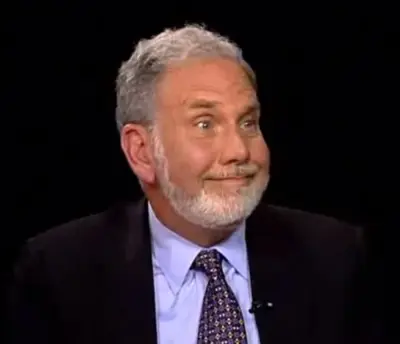
John Edward Sexton is an American lawyer and academic. He presently is the Benjamin F. Butler Professor of Law at New York University, where he teaches at the law school and NYU's undergraduate colleges. Sexton actively writes, including books for both the academic and popular press. He also has created several non-profit educational organizations. Sexton served as the fifteenth President of NYU, from 2002 to 2015. During his time as President, NYU's stature rose dramatically into the rank of the world's top universities; and it became the world's first global network university. Sexton has been called a "transformational" figure in higher education and one of the United States' 10 best college presidents.
