Frederick the Great Quotes
We wish that in all parts of the Kingdom many will become wise and knowledgeable, by having access to a fountain of knowledge, and a seminary of doctrine, so that they, made proficient by study and observation, will serve divine justice, and will become useful to us, for the administration of Justice and of the laws which we urge everyone to obey
This was the first state university in Europe.
Frederick II, 1215-1250, German King & Holy Roman Emperor, Lictere Generales, establishing the University of Naples, June 5, 1224
Sourced by: Eigen's Political and Historical Quotations

This was the first state sponsored university in Europe.


The English law was, for many years, not taught in English Universities.

This was said by one of the characters in this. It is not certain that Dickens believed it himself. But it represents the views of many people who are concerned about indoctrination in schools.


This principle characterized most Islamic cultures for the next 400 years while Christian Europe was in the Dark Ages and had ignored most of the accumulated Western knowledge of the Greeks and Romans, The Muslims however, kept this knowledge alive and added to it supporting great mathematicians, scientists, philosophers, theologians and physicians. During the 12th century extreme fundamentalists gained control over Islam and this great principle of Umar’s was not only ignored but those who acquired new knowledge were persecuted as “innovators” often a capital crime. When Christian Europe began to rise intellectually, the Muslim societies were declining. Even today, the Islamic cultures are split as to the value of new knowledge and while there are modern Muslim scholars and scientists, there are still major forces throughout Islam who consider knowledge that is not in the Koran or which contradicts the Koran not only false, but heretical, often to be punished even by death.
This was written when Islam was intellectually far more advanced than Christian Europe. This viewpoint was one of the reasons for their advanced civilization. It was held by many. It is still held by many Muslims, but for the fundamentalist of Islam today, ignorance of anything that is not in the Koran or other sayings of the Prophet is a virtue. Madrassas throughout the Islamic world teach only the Koran and religious law and nothing of mathematics, philosophy, science, history and never of other religions.

Note the date. Thanksgiving was proclaimed at a slightly different time. This was not only the official Thanksgiving Day proclamation, but the first presidential proclamation of any kind issued by an American President. Ironically, this proclamation was lost for 130 years, and was not found again until 1921 when it was returned to the National Archives.

The papyrus appears to be an instruction booklet for government officials. The Egyptians thought that thinking and the intellect is done by the heart. In this context we would say, “Don’t let your head get big ….”
This was the first state university in Europe.


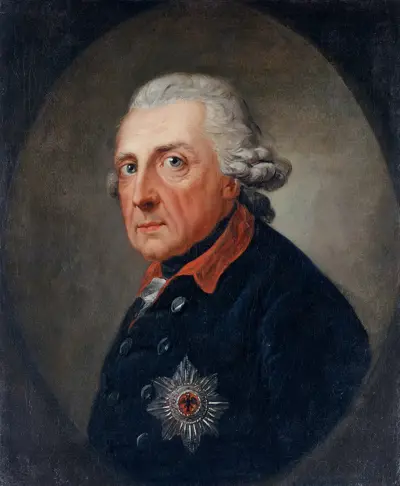
Frederick II was a Prussian king and military leader who ruled the Kingdom of Prussia from 1740 until 1786, reigning longer than any other Hohenzollern king. His most significant accomplishments during his reign included his reorganization of Prussian armies, his military successes in the Silesian wars and the Partitions of Poland, and his patronage of the arts and the Enlightenment. Frederick was the last Hohenzollern monarch titled King in Prussia and declared himself King of Prussia after annexing strategic parts of the Polish–Lithuanian Commonwealth in 1772. Prussia greatly increased its territories and became a leading military power in Europe under his rule. He became known as Frederick the Great (German: Friedrich der Große) and was nicknamed "The Old Fritz" (German: "Der Alte Fritz") by the Prussian people and eventually the rest of Germany.
