Andrew Dickson White Quotes
Under the old American system the whole body of students at a university were confined to a single course, for which the majority cared little and very many cared nothing, and, as a result, widespread idleness and dissipation were inevitable. Under the new system, presenting various courses, and especially courses in various sciences, appealing to different tastes and aims, the great majority of students are interested, and consequently indolence and dissipation have steadily diminished
The “New” system had reformed very slowly {41427} and then had been spurred by Congress passing the Morrill Act which established land grant colleges in each state provided they taught practical things as well. President Buchanan twice vetoed the act as Southern states preferred the “old” style. But in 1862 it passed again and in one of the great American reforms in the midst of the Civil War, most of our great State Universities got their starts when Lincoln signed the act.
Andrew Dickson White, 1832-1918, Historian & President of Cornell University, U. S. Ambassador to Russia and to Germany, History Of The Warfare Of Science With Theology In Christendom, 1895
Sourced by: Eigen's Political and Historical Quotations


Hobson, like Mark Twain in America, was a major critic of imperialism.

If we do not have more scientific graduates from the university we will lose contact with modernity.
One of his major initiatives was to reform the Italian university curriculum to have more scientific offerings. Italy historically has been a great scientific culture ranging from Galileo to Enrico Fermi, but in recent times the universities have not had strong scientific curricula.

Everett was to become the President of Harvard. Private universities had been established by a single religion and typically had professorships of clergy of their religion, but when public universities were contemplated, new thinking was needed in the light of the American Constitution. Madison’s suggested solution is the one that America pursued. Separate the theological seminaries from the public universities.

1st Baron Macaulay. Ireland had no Catholic university at the time. Yet the issues surrounding a potential Catholic university were colored by the politics of the day. Should Protestants attend? Who would select and supervise the faculty ? What about tuition and fees? Should politics be taught? From which point of view? Even academic scholars like Macaulay could not grapple with the issues and hence all action was delayed. See {617687} for a contemporary lay point of view.


What is interesting about this advertisement is the last line advertising that the school was coeducational. Earlham was not the first college in America to admit females—Obelin College did in 1833. However, when schools accepted females there was usually controversy and they did not advertise the fact. But here Earlham’s advertisement tells us a few things about the culture. There must have been many young women who wanted to attend college, otherwise there would not have been any point in advertising for them. In addition, although coeducation at the college level was an uncommon notion, it was probably not offensive to most people in the area lest the ads would not have been publicly run.
Madison had proposed such a university in 1810. Again, the Congress paid no heed to the President’s call for a university in Washington D.C. The United States was one of the few significant countries then that did not have a university in its Capitol.

Santorum’s view was not quite as absurd as this quotation would indicate. His concern was that he believed that colleges and universities were dominated by left wing, liberal faculty, who indoctrinate the students and turn them into Democrats or liberal Republicans. This he thought was bad for the country. The view is not complete paranoia. Higher Education is rarely indoctrination in America. Virtually every school has some politically conservative faculty as well as faculty who are in the political left and some are apolitical. However most of the good schools are liberal in the traditional meaning of the word and as it has been used in Europe and initially in the United States. This liberal tradition is characterized by openness to all ideas and points of view including those that the government or other institutions of society are sometimes uncomfortable with. This intellectual tolerance makes some ultraconservatives uncomfortable. However, other political conservatives are very “liberal” in the intellectual sense including most of the great conservative writers and philosophers and economists of the last centuries. There are people of all political and religious persuasions in most societies who are concerned that the ideas young people might be exposed to are harmful to them and detrimental to society. Most have more faith in young people and see the major role of education is to expose the student to new and different ideas for the student to consider. Santorum is one of the former; all his Republican opponents were of the other point of view.

Hypertrophy means: exaggerated or unnecessary growth or complexity

This historical quotation was typical of the few colleges in America at the end of the18th century. Note that the school was open to anyone who would pay the tuition. Also that 14 years after the America Revolution and independence, English money was the currency for most transactions in the early United States.

The President with Secretary of State, Thomas Jefferson, and several members of Congress, came to Brown to get ideas of how colleges should operate as there were very few colleges in America, and more were needed. Note the classic language of political flattery. Washington was really polished as “retail” politician as this quotation demonstrates.


Metternich called a conference of the heads of all the German states to deal with what they perceived as a dangerous liberalism enveloping German society. Metternich did not personally draft all the resolutions but he controlled the conclave and all the resolutions which are usually ascribed to him.


Drucker probably underestimated the importance of both the credentialing role of universities.

He was referring to the public schools of the 1960’s and the school desegregation movement in the South.
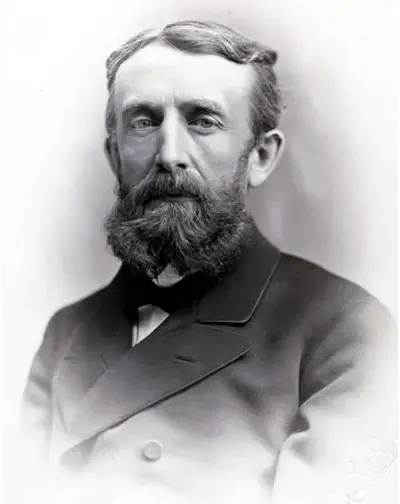
Andrew Dickson White was an American historian and educator who cofounded Cornell University and served as its first president for nearly two decades. He was known for expanding the scope of college curricula. A politician, he had served as state senator in New York. He was later appointed as an American diplomat to Germany and Russia, among other responsibilities.
