John A. Hobson Quotes
Higher education has never been economically self-supporting; it has hardly ever been fully organized from public funds; everywhere it has remained parasitic on the private munificence of wealthy persons. The peril is too obvious to need further enforcement: it is the hand of the prospective, the potential donor that fetters intellectual freedom in our colleges, and will do so more and more so long as the duty of organizing public higher education for a nation out of public funds fails of recognition..
Hobson, like Mark Twain in America, was a major critic of imperialism.
John A. Hobson, 1858–1940, English economist, social scientist & political critic, Moral and sentimental Factors, Part II: The Politics of Imperialism, Imperialism, A Study, 1902
Sourced by: Eigen's Political and Historical Quotations


Hypertrophy means: exaggerated or unnecessary growth or complexity


This quotation became very famous because U. S. Senator Joseph Biden Jr. plagiarized it and was caught by the press.

The governor had unseated Eugene Talmadge, an extreme anti-intellectual who refused to have anyone in his cabinet who had more than an eighth grade education:


The “New” system had reformed very slowly {41427} and then had been spurred by Congress passing the Morrill Act which established land grant colleges in each state provided they taught practical things as well. President Buchanan twice vetoed the act as Southern states preferred the “old” style. But in 1862 it passed again and in one of the great American reforms in the midst of the Civil War, most of our great State Universities got their starts when Lincoln signed the act.


Santorum’s view was not quite as absurd as this quotation would indicate. His concern was that he believed that colleges and universities were dominated by left wing, liberal faculty, who indoctrinate the students and turn them into Democrats or liberal Republicans. This he thought was bad for the country. The view is not complete paranoia. Higher Education is rarely indoctrination in America. Virtually every school has some politically conservative faculty as well as faculty who are in the political left and some are apolitical. However most of the good schools are liberal in the traditional meaning of the word and as it has been used in Europe and initially in the United States. This liberal tradition is characterized by openness to all ideas and points of view including those that the government or other institutions of society are sometimes uncomfortable with. This intellectual tolerance makes some ultraconservatives uncomfortable. However, other political conservatives are very “liberal” in the intellectual sense including most of the great conservative writers and philosophers and economists of the last centuries. There are people of all political and religious persuasions in most societies who are concerned that the ideas young people might be exposed to are harmful to them and detrimental to society. Most have more faith in young people and see the major role of education is to expose the student to new and different ideas for the student to consider. Santorum is one of the former; all his Republican opponents were of the other point of view.

In many eras in many countries, there have been major complaints about the quality of the pre-college education. This statement is typical of many made in 2010 America about the public schools. The term “public schools” in Engand refers to what we call private schools. In 1830, there were few pubic schools in the American sense of free, government operated schools.

Flexner’s ideas influenced American universities, and the movement towards tenure was one of the manifestations; another was that many of the best private universities have as the highest administrative authority the faculty senate not administrators. See {634252} for one political ramification of scholars governing a University. One school faculty senate might have been responsible for an American President running for office.

The President with Secretary of State, Thomas Jefferson, and several members of Congress, came to Brown to get ideas of how colleges should operate as there were very few colleges in America, and more were needed. Note the classic language of political flattery. Washington was really polished as “retail” politician as this quotation demonstrates.


Wriston was one of the few college presidents who would publicly acknowledge that an college education was not necessarily coupled with a college degree. If students performed all their requirements they would get a degree. However, to get an education there was much more involved and there were some college graduates who were really not very well educated.

Rhode Island was known for its religious tolerance since the founders left Massachusetts after being persecuted by the Puritans. However, this was a remarkable policy for its time. Brown was a Baptist school and the President was a Baptist Minister, yet other Protestant denominations, Catholics, Jews were all welcome to attend. The toleration however did not extend to atheists. See {82626} .

The latter years of the 20th century saw a large increase in the number of proprietary, profit making colleges and other institutions of higher education. These were able to utilize the Federal student loan programs. However, many were fraudulent rip-offs. Most were unaccredited. The average proprietary school obtained more federal student loan money per student than non-profit schools {639817}, and did not train their students as well. A smaller percentage of their students get their degrees and find jobs. When they do obtain employment they make less money. Congressional pressure, induced by heavy lobbying, stopped Department of Education efforts to make schools with poor graduation or employment rates ineligible for use of Student Loan Programs.
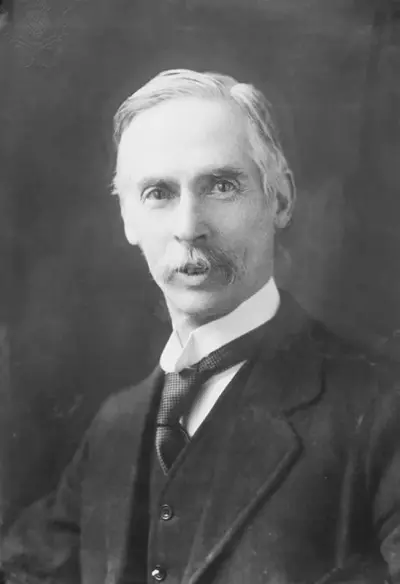
John Atkinson Hobson was an English economist and social scientist. Hobson is best known for his writing on imperialism, which influenced Vladimir Lenin and his theory of underconsumption.
