Abraham Flexner Quotes
A free society of scholars should be governed by scholars and scientists—not administrators, and even the term “organization” should be banned.
Flexner’s ideas influenced American universities, and the movement towards tenure was one of the manifestations; another was that many of the best private universities have as the highest administrative authority the faculty senate not administrators. See {634252} for one political ramification of scholars governing a University. One school faculty senate might have been responsible for an American President running for office.
Abraham Flexner, 1866-1959, Educator and Author, First Director, Institute for Advanced Study at Princeton, Universities: American, English, German, 1930
Sourced by: Eigen's Political and Historical Quotations

Dwight D. Eisenhower had become President of Columbia University. At one of his first meetings with the Faculty Senate, Eisenhower in response to a question stated that the University could not countenance such a policy. At this point, Professor Highit, the Dean of the Faculty Senate, interrupted Eisenhower with this legendary quotation. At Columbia as well as many other of the best private universities, it is the faculty Senate that is the highest educational policy making organ. See {634253} for one of the origins of this. Eisenhower and the University were both great but they were a bad fit. Some historians believe that it was the bad experience at Columbia that brought Eisenhower into Presidential politics. If he had been successful at Columbia, he might have stayed there for his career.


Even sophisticated societies have anti-intellectual movements. This happened in revolutionary France, but also at times even in the United States. In 2012, for example, Rick Santorum a candidate for the Republican presidential nomination called President Obama a “snob” for wanting to enable all students to go to college. Santorum was appealing to an anti-intellectual movement in the country that distrusted intellectuals as “elites.”


Hobson, like Mark Twain in America, was a major critic of imperialism.


The “New” system had reformed very slowly {41427} and then had been spurred by Congress passing the Morrill Act which established land grant colleges in each state provided they taught practical things as well. President Buchanan twice vetoed the act as Southern states preferred the “old” style. But in 1862 it passed again and in one of the great American reforms in the midst of the Civil War, most of our great State Universities got their starts when Lincoln signed the act.

The governor had unseated Eugene Talmadge, an extreme anti-intellectual who refused to have anyone in his cabinet who had more than an eighth grade education:

Horowitz who preaches against tenure and academic freedom gives his opponents wonderful ammunition to support the concepts. His definition of “idiot” is people who have what he believes is a naïve liberal view of politics whom he argues should not be paid to speak, write and possibly indoctrinate students. So a mathematics professor, teaching algebraic topology, but supports Hezbollah for example should be purged from his job. It is just that point of view that was responsible for having tenure and academic freedom in universities in the first place.


Santorum’s view was not quite as absurd as this quotation would indicate. His concern was that he believed that colleges and universities were dominated by left wing, liberal faculty, who indoctrinate the students and turn them into Democrats or liberal Republicans. This he thought was bad for the country. The view is not complete paranoia. Higher Education is rarely indoctrination in America. Virtually every school has some politically conservative faculty as well as faculty who are in the political left and some are apolitical. However most of the good schools are liberal in the traditional meaning of the word and as it has been used in Europe and initially in the United States. This liberal tradition is characterized by openness to all ideas and points of view including those that the government or other institutions of society are sometimes uncomfortable with. This intellectual tolerance makes some ultraconservatives uncomfortable. However, other political conservatives are very “liberal” in the intellectual sense including most of the great conservative writers and philosophers and economists of the last centuries. There are people of all political and religious persuasions in most societies who are concerned that the ideas young people might be exposed to are harmful to them and detrimental to society. Most have more faith in young people and see the major role of education is to expose the student to new and different ideas for the student to consider. Santorum is one of the former; all his Republican opponents were of the other point of view.

While this quotation seems bizarre to us in modern America, there was some historical truth of this in Europe. Before political parties, the Church was the dominant political force, and no professor could be appointed whose views did not coincide with those of the church. Later political parties in many parts of Europe did concern themselves with the views of professors. However, America with its strong tradition of private universities built state public universities in the mold of Harvard, Yale, Brown, Columbia and Princeton where national and local politics were not major factors of appointment and retention of professors. Today it is very rare when a state legislature or government allows politics to become a factor in appointments of professors. The University of Virginia is the most dramatic exception where governors of the state serve for 2 years and when a new governor takes office, he replaces all the trustees and the University. These then have allowed politics to become a major factor in some dramatic cases. And the Federal Universities—the military service academies—do allow political views to encroach on the faculty appointment and retention decisions. However, this is rarely partisan in the sense of Democrat or Republican. But Professors who hold views contrary to BOTH political parties are rare.

She was dealing with a serious campus situation where an invited speaker, Chief of Police Kelly of New York City was prevented from giving his p resentation on the controversial “Stop and Frisk” rules by student protesters who opposed the practice. Brown’s tradition of hearing anyone on the campus regardless of point of view had been broken to the distress of most students, faculty and alumni.

He raised an intellectual alarm that scientists were generally ignorant of the liberal arts and non-scientists were scientifically illiterate. This was not good for society where both were needed for making public policy and developing our society. He was quite influential in British and American higher education where many colleges added required science courses to liberal arts curricula and vica versa. However by the 21st century, the sciences had advanced at such a rapid pace, that the taking of a few college level science courses was not sufficient to produce a scientific literacy, and the problem was no better than in the 1950s.

Hypertrophy means: exaggerated or unnecessary growth or complexity


Rhode Island was known for its religious tolerance since the founders left Massachusetts after being persecuted by the Puritans. However, this was a remarkable policy for its time. Brown was a Baptist school and the President was a Baptist Minister, yet other Protestant denominations, Catholics, Jews were all welcome to attend. The toleration however did not extend to atheists. See {82626} .
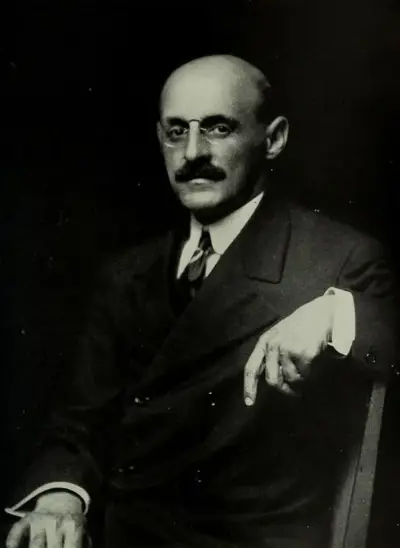
- Born: November 13, 1866
- Died: September 21, 1959
- Nationality: American
- Profession: Educator
Abraham Flexner was an American educator, best known for his role in the 20th century reform of medical and higher education in the United States and Canada.
