Leo Strauss Quotes
The emancipation of the scholars and scientists from philosophy is according to [Nietzsche] only a part of the democratic movement, i.e. of the emancipation of the low from subordination to the high. ... The plebeian character of the contemporary scholar or scientist is due to the fact that he has no reverence for himself.
Strauss, Leo. "Note on the Plan of Nietzsche's Beyond Good and Evil." Studies in Platonic Political Philosophy, University of Chicago Press, 1983, p. 182.


Flexner’s ideas influenced American universities, and the movement towards tenure was one of the manifestations; another was that many of the best private universities have as the highest administrative authority the faculty senate not administrators. See {634252} for one political ramification of scholars governing a University. One school faculty senate might have been responsible for an American President running for office.

Even sophisticated societies have anti-intellectual movements. This happened in revolutionary France, but also at times even in the United States. In 2012, for example, Rick Santorum a candidate for the Republican presidential nomination called President Obama a “snob” for wanting to enable all students to go to college. Santorum was appealing to an anti-intellectual movement in the country that distrusted intellectuals as “elites.”

Spinoza’s ideas were considered so radical and dangerous that he was the only man in history who was excommunicated by the Catholics, the Jews and the Muslims. In addition to being a philosophjer and theologian, Spinmoza was one the the leading scientific experts in optics and the grinding of lenses for schientif instruments and eye glasses. (The lens grinders were the opticians of the era. Both before and after his excummunications his friends were scientists, philosopners and mathematicians.


Joseph M. Keegin is an editor at The Point and a doctoral student in philosophy at Tulane University.


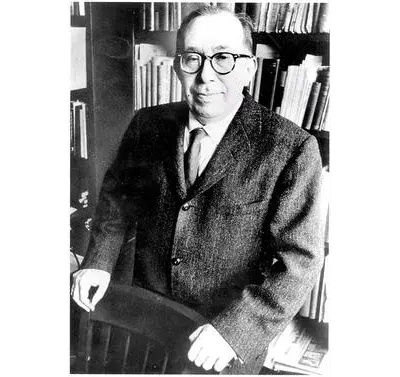
Leo Strauss was a German-American political philosopher and classicist who specialized in classical political philosophy. Born in Germany to Jewish parents, Strauss later emigrated from Germany to the United States. He spent much of his career as a professor of political science at the University of Chicago, where he taught several generations of students and published fifteen books.
