William O. Douglas Quotes
Where suspicion fills the air and holds scholars in line for fear of their jobs, there can be no exercise of the free intellect. Supineness and dogmatism take the place of inquiry. A problem can no longer be pursued to its edges ... discussion often leaves off where it should begin.
William O. Douglas, 1898-1980, U.S. Supreme Court Justice, Chairman, Security & Exchange Commission, 1952
Sourced by: Eigen's Political and Historical Quotations


Santorum’s view was not quite as absurd as this quotation would indicate. His concern was that he believed that colleges and universities were dominated by left wing, liberal faculty, who indoctrinate the students and turn them into Democrats or liberal Republicans. This he thought was bad for the country. The view is not complete paranoia. Higher Education is rarely indoctrination in America. Virtually every school has some politically conservative faculty as well as faculty who are in the political left and some are apolitical. However most of the good schools are liberal in the traditional meaning of the word and as it has been used in Europe and initially in the United States. This liberal tradition is characterized by openness to all ideas and points of view including those that the government or other institutions of society are sometimes uncomfortable with. This intellectual tolerance makes some ultraconservatives uncomfortable. However, other political conservatives are very “liberal” in the intellectual sense including most of the great conservative writers and philosophers and economists of the last centuries. There are people of all political and religious persuasions in most societies who are concerned that the ideas young people might be exposed to are harmful to them and detrimental to society. Most have more faith in young people and see the major role of education is to expose the student to new and different ideas for the student to consider. Santorum is one of the former; all his Republican opponents were of the other point of view.


While this quotation seems bizarre to us in modern America, there was some historical truth of this in Europe. Before political parties, the Church was the dominant political force, and no professor could be appointed whose views did not coincide with those of the church. Later political parties in many parts of Europe did concern themselves with the views of professors. However, America with its strong tradition of private universities built state public universities in the mold of Harvard, Yale, Brown, Columbia and Princeton where national and local politics were not major factors of appointment and retention of professors. Today it is very rare when a state legislature or government allows politics to become a factor in appointments of professors. The University of Virginia is the most dramatic exception where governors of the state serve for 2 years and when a new governor takes office, he replaces all the trustees and the University. These then have allowed politics to become a major factor in some dramatic cases. And the Federal Universities—the military service academies—do allow political views to encroach on the faculty appointment and retention decisions. However, this is rarely partisan in the sense of Democrat or Republican. But Professors who hold views contrary to BOTH political parties are rare.

She was dealing with a serious campus situation where an invited speaker, Chief of Police Kelly of New York City was prevented from giving his p resentation on the controversial “Stop and Frisk” rules by student protesters who opposed the practice. Brown’s tradition of hearing anyone on the campus regardless of point of view had been broken to the distress of most students, faculty and alumni.

Flexner’s ideas influenced American universities, and the movement towards tenure was one of the manifestations; another was that many of the best private universities have as the highest administrative authority the faculty senate not administrators. See {634252} for one political ramification of scholars governing a University. One school faculty senate might have been responsible for an American President running for office.


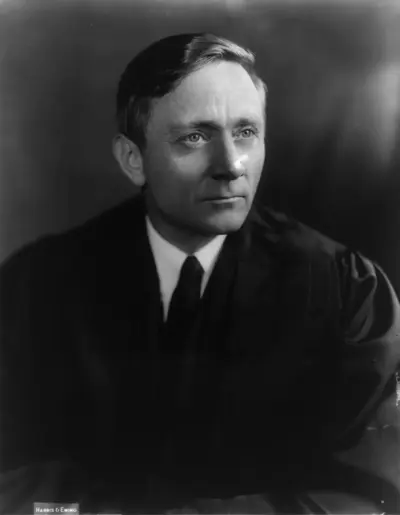
William Orville Douglas was an American jurist and politician who served as an associate justice of the Supreme Court of the United States. Nominated by President Franklin D. Roosevelt, Douglas was confirmed at the age of 40, one of the youngest justices appointed to the court. His term, lasting 36 years and 211 days (1939–75), is the longest in the history of the Supreme Court. In 1975, Time magazine called Douglas "the most doctrinaire and committed civil libertarian ever to sit on the court."
