Ludwig von Mises Quotes
It is completely in accord with the etatist thinking prevalent everywhere today to consider a theory to be finally disposed of merely because the authorities who control appointments to academic positions, want to know nothing of it, and to see the criterion of truth in the approval of a government office.
Mises, Ludwig von. A Critique of Interventionism. Translated by Hans F. Sennholz, Arlington House, 1977, p. 55.


Astronomy and physics were followed by chemistry and then geology and biology, and more recently we have genetics, in vitro fertilization and cloning.


Licensing of the press is

The George W. Bush administration was a very ideological one as opposed to pragmatic. They would not tolerate public officials who would say anything that might undermine an administrative ideological position. In particular, they did not want government scientists releasing any data or information that was not totally consistent with their ideology and program. They introduced a new policy within the government whereby no one could talk to a reporter or make a public speech or deliver a professional paper without first getting approval of administration “public affairs” agents first. Government scientists and other officials had never before been censored like this. Important scientific studies were not made public where they might not support the administration ideological positions. Hanson spoke out against the policy at great embarrassment to the administration. See {614691}.

Spinoza’s ideas were considered so radical and dangerous that he was the only man in history who was excommunicated by the Catholics, the Jews and the Muslims. However, we see in Spinoza the observations and foundations of what would become American and then international views of human rights.

While this quotation seems bizarre to us in modern America, there was some historical truth of this in Europe. Before political parties, the Church was the dominant political force, and no professor could be appointed whose views did not coincide with those of the church. Later political parties in many parts of Europe did concern themselves with the views of professors. However, America with its strong tradition of private universities built state public universities in the mold of Harvard, Yale, Brown, Columbia and Princeton where national and local politics were not major factors of appointment and retention of professors. Today it is very rare when a state legislature or government allows politics to become a factor in appointments of professors. The University of Virginia is the most dramatic exception where governors of the state serve for 2 years and when a new governor takes office, he replaces all the trustees and the University. These then have allowed politics to become a major factor in some dramatic cases. And the Federal Universities—the military service academies—do allow political views to encroach on the faculty appointment and retention decisions. However, this is rarely partisan in the sense of Democrat or Republican. But Professors who hold views contrary to BOTH political parties are rare.


The classic dilemma is that religious moderates and scientists do not argue to force everyone to follow the dictates of science, but in almost all societies and nations, religious fundamentalists strive to force their beliefs on all and make disagreement illegal.


The segment to which he referred were corporations. In his view, the then existing limits on corporate contributions to political campaigns were a “muffling” of the most experienced economic operatives in our society—corporations. Therefore this was censorship of the corporation’s right to freedom of speech. So in his view, in addition to the rights that were abrogated the nation was being blocked from receiving the political voice of one of its best sources of experience and wisdom regarding economic matters. The Supreme Court with the George W. Bush appointees became much more conservative and a few years later, with Scalia leading the charge, the court overruled itself and all its precedents and decided that Corporations were entitled to free speech. See {642321} for an earlier Supreme Court view that corporations were not entitled to the protection of citizens. This Scalia statement was quoted by fellow Supreme Court justice Anthony Kennedy in one of his opinions.
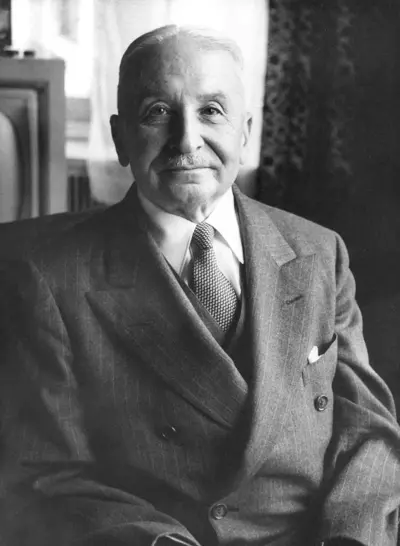
Ludwig Heinrich Edler von Mises was an Austrian School economist, historian, logician and sociologist. Mises wrote and lectured extensively on the societal contributions of classical liberalism. He is best known for his work on praxeology, a study of human choice and action.
