Robert M. Hutchins Quotes
Academic freedom is simply a way of saying that we get the best results in education and research if we leave their management to people who know something about them.
Robert M. Hutchins, 1899-1977, President, University of Chicago, President, The Fund for the Republic, President, Center for the Study of Democratic Institutions, The Higher Learning in America
Sourced by: Eigen's Political and Historical Quotations


The University of Wisconsin had a radical faculty member who claimed that the 9-11 attack was the fault of Vice President Cheney and other absurd claims that were supportive of the Muslim Terrorists. Many called for the firing of the faculty member who had academic tenure. The University decided that college students were not going to be fooled or seduced by such absurd statements and that while in this case the statement were controversial and absurd, what would happen when a faculty statement was just controversial. The University agreed with almost all of the other great universities in America with the fact that the risk of a foolish pedant like this is very tiny in contrast to the risk of allowing officials—-academic or political---to to determine what a professor can say. This freedom has made the American University system the envy of the entire world.


Flexner’s ideas influenced American universities, and the movement towards tenure was one of the manifestations; another was that many of the best private universities have as the highest administrative authority the faculty senate not administrators. See {634252} for one political ramification of scholars governing a University. One school faculty senate might have been responsible for an American President running for office.


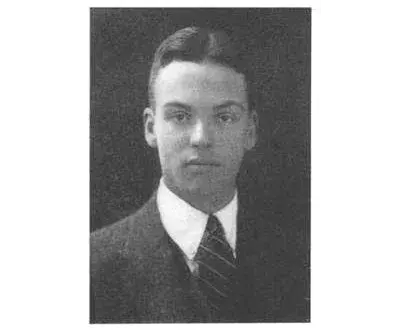
Robert Maynard Hutchins was an American educational philosopher. He was president (1929–1945) and chancellor (1945–1951) of the University of Chicago, and earlier dean of Yale Law School (1927–1929). He was the husband of novelist Maude Hutchins. Although his father and grandfather were both Presbyterian ministers, Hutchins became one of the most influential members of the school of secular perennialism.
