Sidney Hook Quotes
Academic freedom carries with it the right to heresy as well as the right to restate and defend the traditional views.
Sidney Hook, 1902-1989, Political Philosopher, Academic Freedom and Academic Anarchy, 1970
Sourced by: Eigen's Political and Historical Quotations


This became a critically important quotation a half century after it was made. Judge Hand articulated the majority Western and Judeo-Christian value proposition between dissent and heresy. However, for the majority of the Islamic world, the reverse represents the majority value that is held. There is a minority in the West that agrees that avoidance of heresy is paramount and a minority of the Muslim world that agrees that the protection of dissent is the more important value, but the two civilizations were at odds in the 20th and 21st centuries. However, Islam is about 600 years younger than Christianity. 600 years ago, the Christian world agreed with the Muslim society and prevention of heresy was the more important value. The Reformation and the enlightenment followed by the world example of America produced a transformation and this may occur in the majority of the Islamic world in time.

In some universities would sometimes protest the selection of a commencement speaker and demonstrate. On some of these occasions the school administration withdrew the invitation. In addition to the problem described by Beckel, the university sells out its basic intellectual commitment to hear all ideas and points of view—regardless of how repugnant or evil. Commencement speakers tend to create a bigger problem because of the custom of the university granting the speaker an Honorary Degree. Whereas it is against the academic tradition to censor a speaker and having a speaker does NOT associate the University, the faculty or the students with the views of the speaker. But the granting of the Honorary Degree does imply an institutional approval and admiration of the speaker, and that is fair game for student protest. However in the beginning of the 21st century some extreme left wing students succeeded in intimidating spineless university administrators and trustees into censoring speech and the ideas of the speaker. This was typical behavior of the right wing brownshirts of the 1930s when it was the Fascists who were prohibiting certain speakers—usually left wingers. 80 years later it was the left wing extremists engaging in this undemocratic behavior.

She was dealing with a serious campus situation where an invited speaker, Chief of Police Kelly of New York City was prevented from giving his p resentation on the controversial “Stop and Frisk” rules by student protesters who opposed the practice. Brown’s tradition of hearing anyone on the campus regardless of point of view had been broken to the distress of most students, faculty and alumni.

The Scientific Project that developed the Atomic Bomb. Oppenheimer was the great physicist who directed the successful development of the atomic bomb so as to build the weapon before Hitler did in World War II. However, as the technology evolved, he had doubts as to the wisdom of creating even more powerful hydrogen weapons. His viewpoint was hurting the administration’s policy of rapid unlimited nuclear weapons development, and he was the victim of a character assassination whereby his security clearance was withdrawn. The “father” of the atomic bomb was the first American casualty of atomic weapons development.


The University of Wisconsin had a radical faculty member who claimed that the 9-11 attack was the fault of Vice President Cheney and other absurd claims that were supportive of the Muslim Terrorists. Many called for the firing of the faculty member who had academic tenure. The University decided that college students were not going to be fooled or seduced by such absurd statements and that while in this case the statement were controversial and absurd, what would happen when a faculty statement was just controversial. The University agreed with almost all of the other great universities in America with the fact that the risk of a foolish pedant like this is very tiny in contrast to the risk of allowing officials—-academic or political---to to determine what a professor can say. This freedom has made the American University system the envy of the entire world.

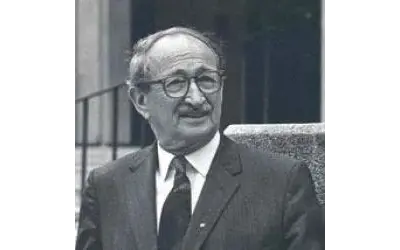
Sidney Hook was an American philosopher of the pragmatist school known for his contributions to the philosophy of history, the philosophy of education, political theory, and ethics. After embracing communism in his youth, Hook was later known for his criticisms of totalitarianism, both fascism and Marxism–Leninism. A pragmatic social democrat, Hook sometimes cooperated with conservatives, particularly in opposing Marxism–Leninism. After World War II, he argued that members of such groups as the Communist Party USA and Leninists like democratic centralists could ethically be barred from holding the offices of public trust because they called for the violent overthrow of democratic governments.
