Judith Butler Quotes
The principle of academic freedom is designed to make sure that powers outside the university, including government and corporations, are not able to control the curriculum or intervene in extra-mural speech.
Butler, Judith. "Israel/Palestine and the Paradoxes of Academic Freedom." Radical Philosophy, no. 135, 2006, p. 11.


The University of Wisconsin had a radical faculty member who claimed that the 9-11 attack was the fault of Vice President Cheney and other absurd claims that were supportive of the Muslim Terrorists. Many called for the firing of the faculty member who had academic tenure. The University decided that college students were not going to be fooled or seduced by such absurd statements and that while in this case the statement were controversial and absurd, what would happen when a faculty statement was just controversial. The University agreed with almost all of the other great universities in America with the fact that the risk of a foolish pedant like this is very tiny in contrast to the risk of allowing officials—-academic or political---to to determine what a professor can say. This freedom has made the American University system the envy of the entire world.


In many nations, including the United States on occasion, governments have made laws as to what is valid science and what is not. Tennessee and other Bible-Belt States have and still do on occasion. The latest being Evolution, which even in the beginning of the 21st century, Kansas determined that it was not proven science, when it is as proven as any science has ever gotten.


In 1897 one of the most contentious political issues in America was that of “free silver”—allowing silver to back American currency as well as gold. The country’s economy could not grow because more currency could not be issued for want of gold to back it. Meanwhile, the U. S. had a great deal of silver. William Jennings Bryant {640992} and the Democrats {591769} advocated free silver, and the Republicans fought to maintain the gold standard. The president of the very conservative Brown University advocated free silver to the shock of the trustees. They sent Andrews a letter asking him not to speak publicly on the subject as it would jeopardize donations and endowments. Andrews resigned. The incident caused a national furor about academic freedom with the public and most of the alumni siding with Andrews. He rescinded his resignation but was pushed out the following year. Later, the trustees named a building after him.


The Scientific Project that developed the Atomic Bomb. Oppenheimer was the great physicist who directed the successful development of the atomic bomb so as to build the weapon before Hitler did in World War II. However, as the technology evolved, he had doubts as to the wisdom of creating even more powerful hydrogen weapons. His viewpoint was hurting the administration’s policy of rapid unlimited nuclear weapons development, and he was the victim of a character assassination whereby his security clearance was withdrawn. The “father” of the atomic bomb was the first American casualty of atomic weapons development.


See related quote.


Charles Seymour was President of Yale University from 1937 - 1950.


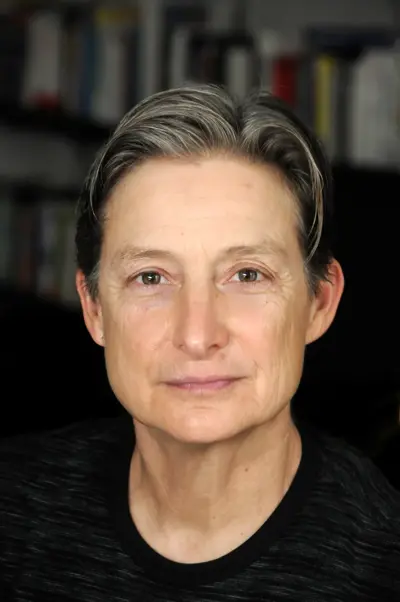
Judith Pamela Butler is an American philosopher and gender theorist whose work has influenced political philosophy, ethics, and the fields of third-wave feminist, queer, and literary theory. In 1993, Butler began teaching at the University of California, Berkeley, where they have served, beginning in 1998, as the Maxine Elliot Professor in the Department of Comparative Literature and the Program of Critical Theory. They are also the Hannah Arendt Chair at the European Graduate School.
