John M. Ellis Quotes
Taxpayers, lawmakers and donors need to wake from the spell cast by American universities’ past glory. Only then can they summon the courage to withdraw funding and force the necessary change: replacing faux-academic political activists with real academic thinkers—people who care about original thought, not peddling an ideology.

This is an extract from a well-known standard for college professors.


Santorum’s view was not quite as absurd as this quotation would indicate. His concern was that he believed that colleges and universities were dominated by left wing, liberal faculty, who indoctrinate the students and turn them into Democrats or liberal Republicans. This he thought was bad for the country. The view is not complete paranoia. Higher Education is rarely indoctrination in America. Virtually every school has some politically conservative faculty as well as faculty who are in the political left and some are apolitical. However most of the good schools are liberal in the traditional meaning of the word and as it has been used in Europe and initially in the United States. This liberal tradition is characterized by openness to all ideas and points of view including those that the government or other institutions of society are sometimes uncomfortable with. This intellectual tolerance makes some ultraconservatives uncomfortable. However, other political conservatives are very “liberal” in the intellectual sense including most of the great conservative writers and philosophers and economists of the last centuries. There are people of all political and religious persuasions in most societies who are concerned that the ideas young people might be exposed to are harmful to them and detrimental to society. Most have more faith in young people and see the major role of education is to expose the student to new and different ideas for the student to consider. Santorum is one of the former; all his Republican opponents were of the other point of view.


Hobson, like Mark Twain in America, was a major critic of imperialism.


Horowitz who preaches against tenure and academic freedom gives his opponents wonderful ammunition to support the concepts. His definition of “idiot” is people who have what he believes is a naïve liberal view of politics whom he argues should not be paid to speak, write and possibly indoctrinate students. So a mathematics professor, teaching algebraic topology, but supports Hezbollah for example should be purged from his job. It is just that point of view that was responsible for having tenure and academic freedom in universities in the first place.


While this quotation seems bizarre to us in modern America, there was some historical truth of this in Europe. Before political parties, the Church was the dominant political force, and no professor could be appointed whose views did not coincide with those of the church. Later political parties in many parts of Europe did concern themselves with the views of professors. However, America with its strong tradition of private universities built state public universities in the mold of Harvard, Yale, Brown, Columbia and Princeton where national and local politics were not major factors of appointment and retention of professors. Today it is very rare when a state legislature or government allows politics to become a factor in appointments of professors. The University of Virginia is the most dramatic exception where governors of the state serve for 2 years and when a new governor takes office, he replaces all the trustees and the University. These then have allowed politics to become a major factor in some dramatic cases. And the Federal Universities—the military service academies—do allow political views to encroach on the faculty appointment and retention decisions. However, this is rarely partisan in the sense of Democrat or Republican. But Professors who hold views contrary to BOTH political parties are rare.


Mr. Ellis is a professor emeritus of German literature at the University of California, Santa Cruz and author of “The Breakdown of Higher Education: How It Happened, the Damage It Does, and What Can Be Done.”
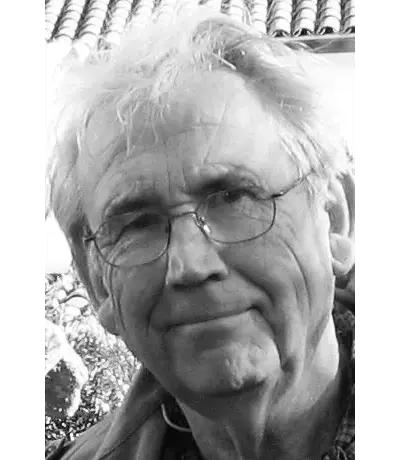
Born in London, John Ellis attended London University, where he obtained a B.A. with first-class honors in German and philosophy (1959), and a Ph.D. in German literature (1965). He then went on to teach at the Universities of Wales, Leicester, and Alberta (Canada) before joining the faculty of the University of California, Santa Cruz in 1966, as a professor of German literature. From 1977 to 1986, Ellis served as dean of the graduate division of UC, Santa Cruz, but took early retirement in 1994 and currently lives in Soquel, California. Ellis is secretary/treasurer of the Association of Literary Scholars and Critics, an organization that was founded in 1994 to reverse the direction literary studies have taken on college campuses in recent decades. Ellis is also editor of Heterodoxy, a publication devoted to fighting political correctness.
