Charles Sumner Quotes
My worst preconception of their appearance and their ignorance did not fall as low as their actual stupidity ... They appear to be nothing more than moving masses of flesh unendowed with anything of intelligence above the brutes
He was describing his first face to face encounter with Southern Negro slaves. He was totally shocked as the Negroes he had seen before were mostly free Blacks in the North-—many of whom were educated and cultured. He became an even more avowed abolitionist but like most anti-slavery whites at the time did not see the majority of Blacks as equal. See Abraham Lincoln: {587773}.
Charles Sumner, 1811-1874, U. S. Senator (Democrat, Free Soiler and Republican, MA), Quoted in David Donald, Charles Sumner and the Coming of the Civil War
Sourced by: Eigen's Political and Historical Quotations


Johnson was probably the most racist president in American History. Also the most ignorant. He is the only President to have never attended a single day of school.


In 1831 a slave preacher, Nat Turner, led a rebellion in North Carolina killing over 50 white men. Even though Turner and the rebels were captured and executed, whites throughout the South, took vengeance on any slaves they could find.


Scott was not known for his intellect.


This is a remarkable analysis given the prejudices of the time. Second to Benjamin Franklin, Rush was the only other real scientist of the American colonial era.

Hammond’s rhetorical tactic was to then argue that it was better to have Blacks be the lower class than whites—hence slavery was a logical conclusion.

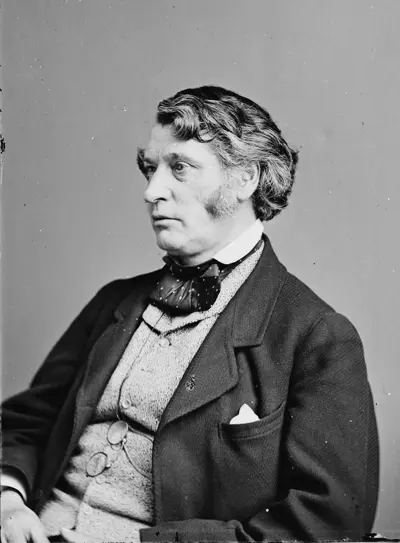
- Born: January 6, 1811
- Died: March 11, 1874
- Nationality: American
- Profession: Politician
Charles Sumner was an American statesman and United States Senator from Massachusetts. As an academic lawyer and a powerful orator, Sumner was the leader of the anti-slavery forces in the state and a leader of the Radical Republicans in the U.S. Senate during the American Civil War. During Reconstruction, he fought to minimize the power of the ex-Confederates and guarantee equal rights to the freedmen. He fell into a dispute with President Ulysses Grant, a fellow Republican, over the control of Santo Domingo leading to the stripping of his power in the Senate and his subsequent effort to defeat Grant's re-election.
