William Wilberforce Quotes
You may choose to look the other way but you can never again say you did not know.
William Wilberforce, 1759-1833, English Member of Parliament Speech on Slavery and the Slave Trade in the House of Commons, 1791
Sourced by: Eigen's Political and Historical Quotations


This is the first formal call for reparations of some kind for slaves after freedom. It is almost always quoted when the issue of reparations for Blacks is discussed. Dwight was not some left wing liberal. Actually he was one of the most conservative Americans at the time. He was an ardent opponent of Thomas Jefferson (see {600384}.) and a staunch supporter of the Federalists. He was one of the major spokesmen for the establishment and upper class of the day. He was also an ardent Christian minister who saw slavery for what it was—an evil sin and an injustice to any humans in that condition.

Jamaica, then part of the British Empire which had outlawed slavery, was quite racially integrated with negroes and mulattos in civil positions such as magistrate. When the ship landed, the slave, John Anderson, was kept locked below deck since if he ran off and reached shore, the Jamaican authorities would have declared him a free man. The presence of the captive negro slave leaked out and a group of Jamaicans boarded the ship uninvited and forcibly removed Anderson, He was taken before a Jamaican magistrate who declared him a free person. The ship’s captain demanded that the authorities return the American private property which had been stolen from an American ship by a “mob”. Harrison, the US Counsel complained to the Jamaican Governor of the “Insult” to the American Flag that had taken place and demanded redress. In both efforts, the original decision of the magistrate was supported and Anderson was a free man. Harrison, an ardent Southerner from Virginia was apoplectic and asked the State Department to make this case a major issue in relations with London. His description of the public opinion then in Jamaica was classic. His racial bias was even supplemented by a virulent anti-Semitism because not only had Jewish Jamaican merchants supported abolition of slavery but some had intermarried with Negroes who had converted to Judaism.

In early New England the General Court served as both a legislature and a judiciary before separation of powers was introduced. 5 years later the Court banned importing African slaves at all. While slavery was not common in Rhode Island, the laws was not seriously enforced on those who would defy them. It does represent a public anti-slavery sentiment that existed in Early America. It would take 200 years for Rhode Island to finally eliminate all forms of slavery.

This was the first success that the anti-slavery forces of England had—the recognition and official classification of slaves as humans. After that, it was easier to abolish the slave trade which occurred 16 years thereafter.


Lincoln, just before the Civil War, quoted Jefferson that if slavery were not ended in America the results would be disastrous. But Lincoln at the time probably did not imagine how right Jefferson was, and Jefferson himself probably 1 how terrible the Civil War would be.


Ironically, events later supported the truth of his statement. He was wrong about the parties however. It was the South who denied liberty to a very large part of their population, and it was the “unconquerable will” of the enslaved Negroes that eventually prevailed. It is hard for most of us in modern times to understand why Davis and other Southerners saw themselves as having freedom curtailed over an economic factor—chattel slavery—and not see that the institution of slavery was a total denial of freedom to a huge part of their population. See England’s Dr. Johnson XXXXX for a classic contemporary statement of this contradiction.

See {523533} and {596221} for earlier similar views by Edmund Burke.


Much of the South was so insular that people knew nothing about the notion of abolition and just assumed that no one would ever consider freeing the slaves. Many never knew that it was the South that first fired on the Union troops and flag. If the North won the war, the assumption was that Northerners would then own the plantations and the valuable slaves. In reality, while all slaves were emancipated in the South, very few plantations and farms were confiscated from their Southern owners by Northerners despite the fact that there was political pressure in the North to confiscate the land of all rebels who had committed treason and use the value to repay the Union bonds and care for the wounded Union veterans and the widows of dead Union Soldiers. Eggleston was an accomplished writer who had served in the Confederate army of the Civil War. 20 year after the war he wrote a series of articles for the prestigious Northern Atlantic Monthly trying to convey the war from the Southerner’s point of view.

Washington was from Virginia, the largest of the slave states, and he himself owned slaves. In his will he emancipated all his slaves. Most of his fellow Southern Slave owners however not only disagreed about the abolition of slavery but were adamant that slavery spread so that the abolitionists never attain a majority.


As an entertainer she had toured much of the world and seen American slavery and that of some other nations. She became a staunch abolitionist and like entertainers in the 20th and 21st centuries she used her celebrity to give anti-slavery lectures and perform for audiences where she donated the proceeds of the event to the abolition cause. She is a particularly interesting political figure in that she seems to be one of the first entertainers to perform for a social cause and become an activist.
Many historians point to this quotation as demonstrating Jefferson’s antipathy to slavery. However, others, more cynical, observe that by curtailing the ability to bring new slaves into Virginia, the economic value of the slaves who already existed increased markedly, First because there was a limited supply and a growing economy, but more important because the slave owner could breed and sell slaves from the existing stock he had. Jefferson was very aware of this economic fact, had worked out the mathematics and economics, and even advised friends to take advantage of it. See {629765}. Jefferson’s view of slavery was very complex and ambivalent.
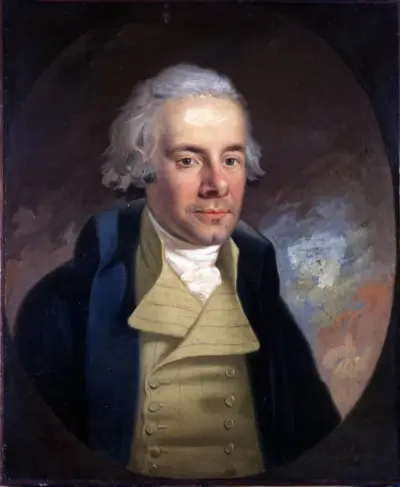
William Wilberforce was a British politician, philanthropist, and a leader of the movement to abolish the slave trade. A native of Kingston upon Hull, Yorkshire, he began his political career in 1780, eventually becoming an independent Member of Parliament (MP) for Yorkshire (1784–1812). In 1785, he became an evangelical Christian, which resulted in major changes to his lifestyle and a lifelong concern for reform.
