Alex Kozinski Quotes
Legislatures now pass statutes because of, not despite, their lack of clarity. By using vague language, legislators can avoid making the difficult political choices that they have to confront when drafting a statute precisely.
Alex Kozinski, U. S. Federal Appeals Judge, Quoted in The Washington Post, April 28, 1991
Sourced by: Eigen's Political and Historical Quotations


In the English system there is no “separation of powers”. Parliament makes the laws and its ministers execute them. The highest judges are members of Parliament (the House of Lords) as well. So Lord Bereford was in the legislature when the statute was debated and passed.


This clause was a throwback to the days before the separation of powers where the legislature could imprison anyone they thought contemptuous or interfering with their deliberation. Contrast this with the earlier constitution of Massachusetts which forbade the legislature from acting as a judge or prosecutor. See {616750} and {616749}. Also this was a clear invasion of freedom of the press and freedom of speech provided by the Bill of Rights. However, at the time, it was not clear that the Federal Constitution was binding on State Governments on State Matters. Modern law is still ambiguous on this general point, but not on freedom of speech and the press which is currently definitely binding on the states.


There are many methods of voting in a legislative body. “Viva Voce” is Latin for “by Voice” and is often called a “Voice Vote”. Voting by ballot takes longer but had the advantage or disadvantage of secrecy. The theory was that if the New York Legislators could vote in a secret ballot, the lobbies and special interests would not be as influential since they would never know for sure—unless there were a unanimous vote—how any particular legislator voted. A further advantage is that Party Discipline could not be imposed and parties or “factions” as they were then called would be less powerful—a great concern of all the patriots who tended to distrust parties. The disadvantage was that the people who elected the legislator would never know how he voted. Note the frank admission that this was an “experiment”. Americans of the era realized that almost everything they were doing was a political experiment and this introduced a pragmatic force into structure and procedures of American politics.


The Czar, a total autocrat, was out of touch with most of the civilized world. Under much pressure from his advisors who realized that there was much unhappiness with an autocracy, the Czar made this reform which seemed a major concession and was very much welcomed by the people. However, it had relatively little practical effect. The Duma could not make laws, they could only ratify those made by the Czar and his ministers. However, few members of the Duma were willing to vote against a measure that the Czar wanted. It had no practical effect on improving the standard of living and the economic development of a backward empire.

Commenting on the legal defense of executive actions by the Obama Administration and how it applies to contesting similar executive actions by Donald Trump…


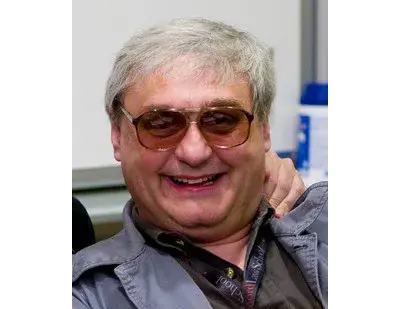
Alex Kozinski is a Romanian-born American jurist and lawyer who was a judge on the U.S. Court of Appeals for the Ninth Circuit from 1985 to 2017. He was a prominent and influential judge, and many of his law clerks went on to clerk for the U.S. Supreme Court.
