George Mason Quotes
It would be as unnatural to refer the choice of a proper character for chief magistrate to the people, as it would be to refer a trial of colors to a blind man.
George Mason, 1725-1792, Member, Virginia & Federal Constitutional Conventions, Debate, Constitutional Convention, Philadelphia, PA, 1787
Sourced by: Eigen's Political and Historical Quotations


1st Earl of Beaconsfield


This phrase was coined by Meiklejohn

President George W. Bush initiated an invasion of Iraq based on the fact that Iraq was developing nuclear, chemical and biological weapons. After the invasion however, there were none of these weapons found and much evidence that there were not any at that point in time. By the time Congress, the body which is supposed to declare war, found out that the reason for the war was bogus, it was too late. We had already occupied the country and were in the midst of a civil war. The President either acted on bad intelligence or wanted to invade Iraq for other reasons and history may finally tell us which, but Fein sees the problem as too much secrecy in the executive branch.

At the time the power and prestige of Congress relative to the Presidency , was much greater than it is today. It was McKinley’s successor, Theodore Roosevelt, who began a 20th century trend which led to a reversal of the relationship between the Executive Branch and the Legislative.

The electoral college had tied between Thomas Jefferson and Aaron Burr, and under the Constitution, this threw the decision to the House of Representatives. The House was deadlocked politically between Federalists and Democratic Republicans, but Jefferson had won the popular vote by a substantial margin. Morris, a leading Federalist, and one of Jefferson’s political enemies, however argued that the will of the people should be respected, and the man who won the popular should be President. The vote then went to Jefferson who became our third President.


For Turgot, see below

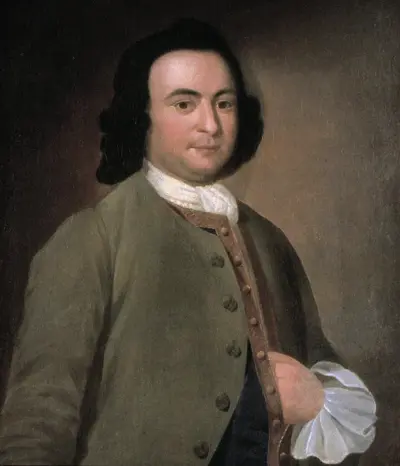
George Mason IV was an American planter, politician and delegate to the U.S. Constitutional Convention of 1787, one of three delegates who refused to sign the Constitution. His writings, including substantial portions of the Fairfax Resolves of 1774, the Virginia Declaration of Rights of 1776, and his Objections to this Constitution of Government (1787) opposing ratification, have exercised a significant influence on American political thought and events. The Virginia Declaration of Rights, which Mason principally authored, served as a basis for the United States Bill of Rights, a document of which he has been deemed a father.
