Rutherford B. Hayes Quotes
I am not liked as a president by the politicians in office, in the press, or in Congress. But I am content to abide the judgment–the sober second thought–of the people
Rutherford B. Hayes, 1822-1893, 19th President of the United States (Republican, OH), 1878
Sourced by: Eigen's Political and Historical Quotations

He was responding to criticism that the media was bashing the President.


The President was threatened with impeachment by the Russian parliament.


Tweed was the powerful boss of New York City’s corrupt political machine—Tammany Hall. The newspapers had been attacking Tweed and Tammany Hall for several years but they never resonated with the public. The cartoons of Thomas Nast however were not only understood by illiterates, but the cartoons caused an emotional reaction against Weed and his organization which led to their downfall.


He had been accused of heading a country that denied freedom of the press. However, there was much material in the press that was very critical and disrespectful of the President and the government. This reality was an effective defense. It turned out that there were some partisan extremists in a society rife with historical tribal conflict who had intimidated a few journalists and killed another. It was not the President or his government officials or police.
Roosevelt was such a breath of fresh air as a politician that cynical political journalists saw him as almost a savior of American politics at the time. His dynamic personality, independence from outside influence, and his enthusiasm for reforming the out of control corporate dominated society without destroying the corporations like Bryan and the populists, attracted many who had never before supported any politician.


McCarthy was in many ways like Donald Trump. One was taht the press loved to cover his statements and accusations that were so absurd and sensational that they sold a lot of nespapers, magazines and obtained many TV / Radio viewers/listeners. As a result he got much more media coverage that he warranted in teh view of many, President Dwight Eisenhower, who generally would not even mention McCarthy's name was percieved by Adlai Stephenson and many others as weak and fearful of McCarthy, Tannenhous and some other historians believed that fear had nothing to do with it, but that Eisenhower not only chose this as a deliberate strategy, but one that was quite effective.


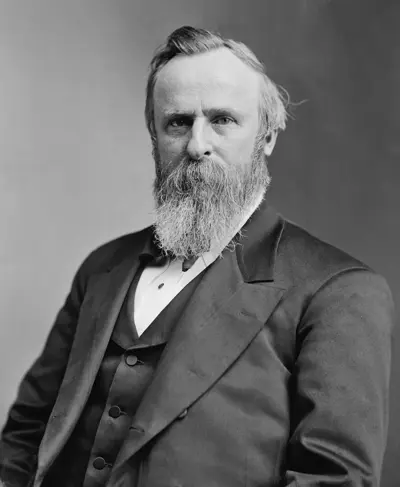
Rutherford Birchard Hayes was an American politician and attorney who served as the 19th president of the United States from 1877 to 1881, after serving in the U.S. House of Representatives and as governor of Ohio. A lawyer and staunch abolitionist, he had defended refugee slaves in court proceedings during the antebellum years. He negotiated the political agreement to end federal support of Reconstruction.
