William M. Tweed Quotes
I don’t care what the newspapers write about me. My constituents can’t even read. But get rid of those damn pictures [political cartoons]
Tweed was the powerful boss of New York City’s corrupt political machine—Tammany Hall. The newspapers had been attacking Tweed and Tammany Hall for several years but they never resonated with the public. The cartoons of Thomas Nast however were not only understood by illiterates, but the cartoons caused an emotional reaction against Weed and his organization which led to their downfall.
William Marcy Tweed, 1823-1878, U. S. Congressman (Democrat, NY), Tammany Hall Political Leader, Quoted on PBS Evening News, July 22, 2013
Sourced by: Eigen's Political and Historical Quotations


Catledge came to California to cover the gubernatorial race between incumbent Republican Governor Merriam and writer Upton Sinclair, an avowed socialist who was running neck and neck. Palmer was then the Political Editor of the Los Angeles Times and his newspaper never covered anything Sinclair did for the campaign and only covered Merriam. Catledge observed that this was not only unfair but poor journalism.


Marlette was inundated by complaints from Muslims for his 2002 cartoon depiction of Muhammad driving a Ryder rental truck like the one used by convicted Oklahoma City terrorist bomber, Timothy McVeigh. The caption was, “What would Muhammad drive?” He was front-page news in Saudi Arabia and other Islamic nations. He received death threats. The Council on American-Islamic Relations and the Muslim World League both demanded an apology. Marlette refused. When he was killed in an automobile crash in July of 2007, many Muslims believed that this was the retribution of Allah.


The queen was a lot more sophisticated about the newspapers than politicians in the 21st century.

Samuel Langhorne Clemens, 1835-1910. Grant was the victim of more journalistic errors than most politicians as a number of his appointees turned out to abuse their position for their own gain. Often, Democratic leaning newspapers would claim the Grant was aware of the corruption, sharing in it or both, When there was later proof of Grant’s non involvement, most newspapers would never publish a retraction of correction.
Samuel Langhorne Clemens, 1835-1910

Sherman felt that the newspapers of North and South fired up hatred of one side against the other and especially in the South, falsely reported the chances of the Confederacy and made rational Southerners who wanted to minimize the death and destruction to their people were made to feel like traitors and cowards.

Vladimir Lenin. Lenin was echoing criticisms that were made the world over and even by some in the United States. However, his solution to have the press controlled by the ruling party just changed the cast of characters who were propagandizing and distorting the truth. Lenin was not able to offer a better solution nor were others. However, with enough affluence the capitalist society produced enough different publishers all competing that one did not dominate public opinion. With technology of TV and the Internet, the bar to entry is so small that almost anyone can be a publisher and find an interested market. In a way technology has solved much of the problem for capitalistic and totalitarian societies alike. In the latter, even censorship is not easy or feasible on a large scale.
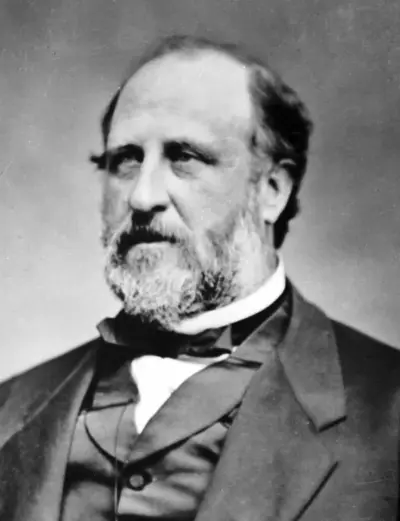
William Magear Tweed, often erroneously referred to as "William Marcy Tweed" (see below), and widely known as "Boss" Tweed, was an American politician most notable for being the "boss" of Tammany Hall, the Democratic Party political machine that played a major role in the politics of 19th-century New York City and State. At the height of his influence, Tweed was the third-largest landowner in New York City, a director of the Erie Railroad, a director of the Tenth National Bank, a director of the New-York Printing Company, the proprietor of the Metropolitan Hotel, a significant stockholder in iron mines and gas companies, a board member of the Harlem Gas Light Company, a board member of the Third Avenue Railway Company, a board member of the Brooklyn Bridge Company, and the president of the Guardian Savings Bank.
