Mark Twain Quotes
...the liberty of the Press is called the Palladium of Freedom, which means, in these days, the liberty of being deceived, swindled, and humbugged by the Press and paying hugely for the deception.
Samuel Langhorne Clemens, 1835-1910
Mark Twain, Writer, Founder, Anti-Imperialist League, Twain’s Sketch Book, November 1870
Sourced by: Eigen's Political and Historical Quotations


The queen was a lot more sophisticated about the newspapers than politicians in the 21st century.


In 1948 in the midst of the Red Scare the HUAC and its Senate counterpart had started to hound a former Assistant Secretary of State, Lawrence Duggan. Typical of the times, those who disagreed with Duggan’s political views anonymously leaked material to the press alleging that Duggan might have been a spy. The press had a feeding frenzy and Dugan committed suicide in the midst of the pressure. Most in Congress paused to contemplate the consequence of what was occurring. Even Richard M. Nixon regretted the “misunderstandings.” Dugan’s father, however, an old acquaintance of Edward R. Murrow, the then dean of American broadcasters, however primarily blamed the press for printing all the unsubstantiated rumor and innuendo.


Sherman was one of the few military leaders who tended to always get good press coverage and who did not develop good relations with the newsmen. He tended to excoriate them although at a personal level he made a disctinction between the worst and the best.


The American Press was actually split and there were Tory and revolutionary editors. However, like almost all politicians of all times in time of crisis, he saw the press as inaccurate and corrupt and an unfortunate “appendage of public liberty.”


Vladimir Lenin. Lenin was echoing criticisms that were made the world over and even by some in the United States. However, his solution to have the press controlled by the ruling party just changed the cast of characters who were propagandizing and distorting the truth. Lenin was not able to offer a better solution nor were others. However, with enough affluence the capitalist society produced enough different publishers all competing that one did not dominate public opinion. With technology of TV and the Internet, the bar to entry is so small that almost anyone can be a publisher and find an interested market. In a way technology has solved much of the problem for capitalistic and totalitarian societies alike. In the latter, even censorship is not easy or feasible on a large scale.

Arguing against explicit guarantees of press freedom in the Constitution Hamilton felt that the freedom could be maintained by public opinion and the good will of government:


Sherman felt that the newspapers of North and South fired up hatred of one side against the other and especially in the South, falsely reported the chances of the Confederacy and made rational Southerners who wanted to minimize the death and destruction to their people were made to feel like traitors and cowards.


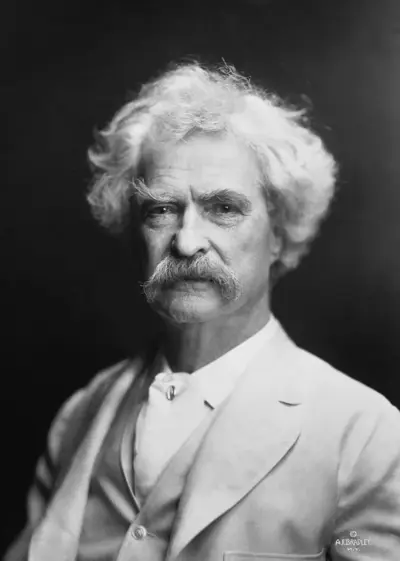
Samuel Langhorne Clemens, known by his pen name Mark Twain, was an American writer, humorist, entrepreneur, publisher, and lecturer. He was lauded as the "greatest humorist the United States has produced," and William Faulkner called him "the father of American literature". His novels include The Adventures of Tom Sawyer (1876) and its sequel, the Adventures of Huckleberry Finn (1884), the latter often called "The Great American Novel".
