John Stuart Mill Quotes
All governments must displease many persons, and these having now regular organs, and being able to express their sentiments, opinions adverse to the measures of government would often be expressed.
John Stuart Mill, 1806-1873, Member of Parliament, British Political Economist, Representative Government, 1861
Sourced by: Eigen's Political and Historical Quotations

He was responding to criticism that the media was bashing the President.


Her organization does survey research throughout the world. The “freedom” to conduct a survey does not exist in many if not most of the nations around the world. Even a democratic country like India requires government approval to conduct a survey.


This is typical of Nations which do not guarantee freedom of speech or the press. Whenever the authorities want to censor anything, they simply assert that it is contrary to Islamic values or objectives.


Nixon’s views of free speech rights did not recognize the right of those who advocate revolution or government or system change in America. By his standard all of the Founding Fathers should not have been entitled to most of their early speeches. The Supreme Court repeatedly rejected his standard, distinguishing between speech to change or reform the government and illegal action to bring those changes about.


The important thing about rights is that they exist independent of majority opinion. The majority might want to trample the rights of an unpopular group or individual. Very often Islamic modernists like Serageldin are many among the educated Muslims but the majority views are often drowned out by the violence and extremist statements of the fundamentalists.


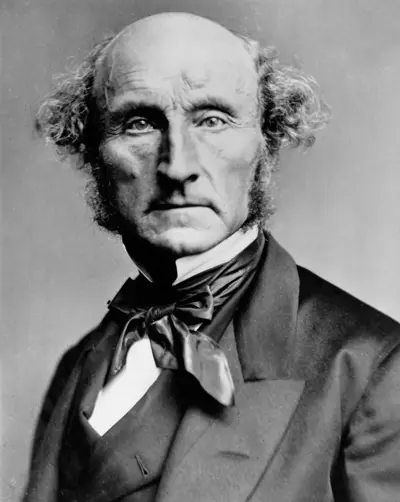
John Stuart Mill, usually cited as J. S. Mill, was an English philosopher, political economist, Member of Parliament, and civil servant. One of the most influential thinkers in the history of classical liberalism, he contributed widely to social theory, political theory, and political economy. Dubbed "the most influential English-speaking philosopher of the nineteenth century", he conceived of liberty as justifying the freedom of the individual in opposition to unlimited state and social control.
