Saudi Arabia Quotes
Freedom of expression is guaranteed within the framework of Islamic and national objectives and values.
This is typical of Nations which do not guarantee freedom of speech or the press. Whenever the authorities want to censor anything, they simply assert that it is contrary to Islamic values or objectives.
Saudi Arabia, Mass Media Guidelines, Passed of the Council of Ministers, 1982
Sourced by: Eigen's Political and Historical Quotations


Marlette was inundated by complaints from Muslims for his 2002 cartoon depiction of Muhammad driving a Ryder rental truck like the one used by convicted Oklahoma City terrorist bomber, Timothy McVeigh. The caption was, “What would Muhammad drive?” He was front-page news in Saudi Arabia and other Islamic nations. He received death threats. The Council on American-Islamic Relations and the Muslim World League both demanded an apology. Marlette refused. When he was killed in an automobile crash in July of 2007, many Muslims believed that this was the retribution of Allah.


This set of guidelines not only denies the media freedom of expression but requires them to protect Saudi’s from information or views that might divert them from Islam. The media must by law protect the establishment of a particular religion.

She was defending the right various media to display cartoons of the Muslim Prophet Muhammad which were very offensive to orthodox and traditional Muslims, many of whom had rioted in countries the world over. Many media outlets thought the cartoons too offensive to be displayed; others were too intimidated to display the cartoons and some displayed them anyway. Ali, born and brought up as a Muslim was one of the relatively few of that religion to defend the right of the publishers,


Note how the second paragraph nullifies the first of the government declares an emergency. This is a trick that is very common in constitutions.

Nixon’s views of free speech rights did not recognize the right of those who advocate revolution or government or system change in America. By his standard all of the Founding Fathers should not have been entitled to most of their early speeches. The Supreme Court repeatedly rejected his standard, distinguishing between speech to change or reform the government and illegal action to bring those changes about.

In September of 2005 a Rose’s newspaper published some political cartoons showing the hypocrisy of some Muslims who use Islam to justify murder of innocents and terrorism. Months later, in January of 2006 many in the Middle East protested vehemently and Muslim riots broke out because the Prophet Muhammad's visage was depicted against Islamic tradition. Many Muslim nations started a boycott against Denmark. Many Muslim leaders claimed that insulting religion was an “abuse” of freedom of speech including those from nations which regularly publish material that is virulent against Christians and Jews. Apologies were demanded from Rose.

The evils of the time were even worse than in modern times. Most newspapers, journals, and periodicals were in 1835 actually owned and operated by political parties or people totally identified with political parties. In modern times, there are publications and blogs which are controlled by political forces, but most are not.


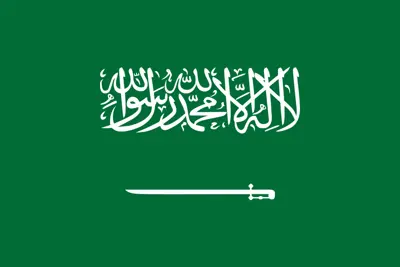
Saudi Arabia, officially the Kingdom of Saudi Arabia, is a country in Western Asia constituting the vast majority of the Arabian Peninsula. With a land area of approximately 2,150,000 km2 (830,000 sq mi), Saudi Arabia is geographically the largest sovereign state in Western Asia, the second-largest in the Arab world (after Algeria), the fifth-largest in Asia, and the 12th-largest in the world. Saudi Arabia is bordered by Jordan and Iraq to the north, Kuwait to the northeast, Qatar, Bahrain, and the United Arab Emirates to the east, Oman to the southeast and Yemen to the south; it is separated from Egypt and Israel in the north-west by the Gulf of Aqaba. Saudi Arabia is the only country with both a Red Sea coast and a Persian Gulf coast, and most of its terrain consists of arid desert, lowland, steppe and mountains. As of October 2018, the Saudi economy was the largest in the Middle East and the 18th largest in the world. Saudi Arabia also has one of the world's youngest populations, with approximately 50 percent of its population of 34.2 million being under 25 years old.
