Quintus Ennius Quotes
To open his lips is crime in a plain citizen.
Ennius, Quintus. Remains of Old Latin, Volume I: Ennius and Caecilius. Edited and translated by E. H. Warmington, Harvard University Press, 1935, p. 343.

She had been jailed for “inciting to riot.” As she was released from prison thousands of well wishers greeted her.

In November of each year protesters gather at Fort Benning, the site of the U. S. Army School of the Americas. The School provides training for Latin American Military Officers in Counter-Insurgency Training. The graduates of the school have included some of the worst Latin American killers and torturers (See {41061} for example) who rose to positions of power in their lands. It has also included many leaders who did not ever resort to war crimes and atrocities and also became leaders of their countries. It has been an institution of great controversy since it was discovered that the school at one point taught methods of interrogating insurgents that were tantamount to torture. Defenders of the school claim that but for the school, the military atrocities would have been worse and that it contributed to more human and democratic governments in the Americas. The annual protest has attracted more than 16,000 protesters, some of whom—like Bourgeois—have been guilty of trespass and interfering with a government facility and have served jail terms for those violations.


He had just come from Russia and the Queen Mother had asked him why he was not more talkative.


Referring to an Order-in-Council forbidding any discussions of the Canadian Cabinet's secret uranium deals:

Nixon’s views of free speech rights did not recognize the right of those who advocate revolution or government or system change in America. By his standard all of the Founding Fathers should not have been entitled to most of their early speeches. The Supreme Court repeatedly rejected his standard, distinguishing between speech to change or reform the government and illegal action to bring those changes about.


Bruce is one of the few American Comedians to so offend the political establishment that he was constantly legally harassed throughout his career. He was actually criminally convicted in New York for obscenity. In 2003 he was posthumously pardoned by the New York Governor, the first posthumous pardon in state history.
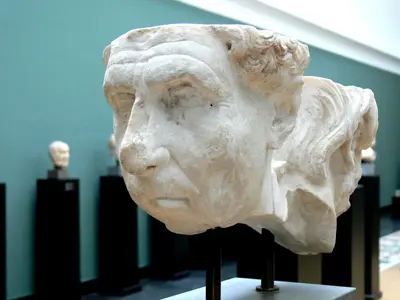
Quintus Ennius (Latin pronunciation: [ˈkᶣiːnt̪ʊs̺ ˈɛnːijʊs̺]; c. 239 – c. 169 BC) was a writer and poet who lived during the Roman Republic. He is often considered the father of Roman poetry. He was born in Rudiae, formerly a small town located near modern Lecce in the heel of Italy (ancient Calabria, today Salento), and could speak Oscan as well as Latin and Greek. Although only fragments of his works survive, his influence in Latin literature was significant, particularly in his use of Greek literary models.
