Gouverneur Morris Quotes
Since it was evidently the intention of our fellow-citizens to make Mr. Jefferson their President, it seems proper to fulfill that intention.
The electoral college had tied between Thomas Jefferson and Aaron Burr, and under the Constitution, this threw the decision to the House of Representatives. The House was deadlocked politically between Federalists and Democratic Republicans, but Jefferson had won the popular vote by a substantial margin. Morris, a leading Federalist, and one of Jefferson’s political enemies, however argued that the will of the people should be respected, and the man who won the popular should be President. The vote then went to Jefferson who became our third President.
Gouverneur Morris, 1752-1816, U. S. Commissioner to England & U. S. Minister to France, U. S. Senator (Federalist, NY), Arguing for the House of Representatives making Jefferson the President, 1800
Sourced by: Eigen's Political and Historical Quotations


The column was written in the midst of the confusing 2000 Presidential election.

The irony of this statement is that Kennedy then selected Lyndon Johnson as his running mate. Johnson, most experts agree, was able to swing Texas into the Democratic tally, and many of those same experts generally agree with Kennedy’s point but believe that his election was the only exception to the general rule in modern times.

This is not just a theoretical possibility. It has occurred several times. The latest was on the 1990 election where Gore got half a million more votes than George W. Bush, but Bush became President.

Jefferson thought that the possibility that a man could become President even though more Americans voted for his opponent was undemocratic and a great flaw in our Constitution. It has actually happened several times and each time the Electoral College debate renewed, but there has never been enough concern to produce a Constitutional Amendment.

Trump had an extraordinary sensutuvuty to anything that might seem to diminish his popularity, capability or effectiveness--especially if it nimplied that sny one lese might have ben better at something. While his inaguration was a major event in America with his supporters celebrating his elkection, the crowd was smaller than those of the teo previous inaguartions but nine-the-less very imopressive in size and enthusiasm. Then the nes media reported this fact, Trump publicly accused them oif faking the news. He even took a portion if his speech to ther CIA staff to rail about the size of the crowd. When several news organziations released arial photos of of his and earlier inaguration that clearly showed the contrast, we went on the next day. Many were puzzled as to why he would spend a significant proportion of his publioc and press exposure to this trivisl issue in his firdt days as president. Esperienced political hands gave him very pointed advice like this from the former White House Chief if Staff snd thern mayor of Chicago.

Donald Trump had won the presdiency by winning a majority of the votes of the Electoral College. However his opponent Hillary Clinton garnered about 2 million more votes. Several other presidents have won with a minority vote. These occurances did not affect the Presidents' legitimacy as the Electoral College was specified in the Constitution, However, it did undercut the concept that the President had a mandate. Other presidents just carried on and either earded the respect of the majoprity of AMericans or did not over time. Howevewr, Trump, who was so sensitive and fragile about his image, kept responding to comedians like Bee by claiming that the only reason he lost the poular vote was voter fraud by illegal immigrants. However he never offered any evidence of such and there were no convictions for same or even arrests and trials.

This quotation illustrates the "winner take all" conceopt of many political cultures that call themselves and think of theselves as a democracy. But a true democracy does not allow a tyranny of the majority--especially a very narrow minority.


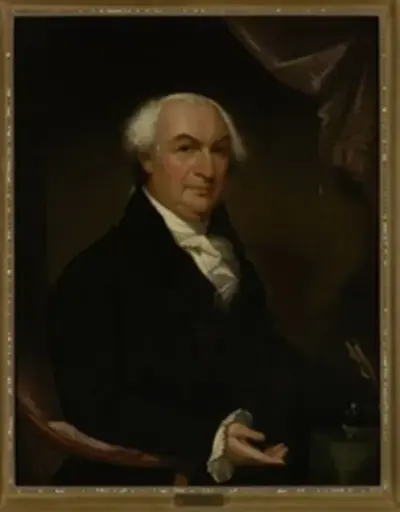
Gouverneur Morris was an American statesman, a Founding Father of the United States, and a signatory to the Articles of Confederation and the United States Constitution. He wrote the Preamble to the United States Constitution and has been called the "Penman of the Constitution." In an era when most Americans thought of themselves as citizens of their respective states, Morris advanced the idea of being a citizen of a single union of states. He was also one of the most outspoken opponents of slavery among all of those who were present at the Constitutional Convention. He represented New York in the United States Senate from 1800 to 1803.
