Edward Mandell House Quotes
Unfortunately it has come to pass that we choose our Presidents because of their vote-getting qualities in certain doubtful states rather than for their qualifications for the office they are to fill.
Edward Mandell House, 1858-1938, Army Colonel and Aide to President Wilson & President Taft, “America in World Affairs: a Democratic View”, Foreign Affairs, June 1924
Sourced by: Eigen's Political and Historical Quotations

On that date, a few days before the election the FBI Director publicly announced that he was reopening the Investigation into possible wrongdoing of Ms. Clinon's use of provate emails. He had earlier cleared her of all criminal wrongdoing and and he claimed that they had found a new computer that had some e-mails that they had not not yet examined for possible criminal activity. In addition WikiLeaks published on the Internet thousands of private e-mails that the Russians had hacked from her campaign chairman and her comittee. The two things started moving her trend down so that she only one the popular vote by almsot 3 million votes and she needed more to overcome the electoral collage gave to rural and small states. Ironically, the FBI went throught the contents of the computer and after the election announced that there was nothing there that incriminated Ms. Clinton, and there was no criminal activity found in all the hacked e-mails. And the FBI Director was chastized by the Republican Justice Department after Donald Trump took office for improperly making pubic investigation details before there were any findings. The FBI Director was subsequently fired but this and otehr reasons were given as the reason.

The margin of victory was 50,000 votes; however, there were accusations that Buchanan had “bought” the election.

At the time of this statement neither major political party had a base large enough to win a Presidential election. The winner must get independent votes. However, much campaigning is done to motivate the base as without the base winning is also impossible.

In the 2012 election, the candidates campaigned at all in only 10 states after the political conventions.


See {583344} for Dewey's famous reply.


Al Gore had substantially won the popular vote but needed Florida to win the electoral vote. There had been a series of vote counting irregularities with many people being denied the right to vote to the point that no one was sure who had won Florida. The election moved from the ballot box to the courts and the Florida Supreme Court ruled that there should be some recounts in areas where Bush had supposedly won. The Bush forces and the Republicans appealed to the Supreme Court where the judges all reversed their traditional positions to support the party who had nominated them. Liberals who usually voted to have the Federal government override the states, voted for Florida to be upheld. Conservatives who usually supported the right of the States to decide such things without Federal Interference, voted to overturn the State Supreme Court. There were 5 Republicans and 6 Democrats and George W. Bush won the election by one judge’s vote.


In reality, Donald Trump won despite the opoposition of the leaderships of both political parties. In the Republican Primary elections he defeated the condidates preferred by the Republican leaders and elected officials accross the country. However, once he won the promaries, most--many reluctantly--supported him rather than the Democrat. Then Tump, to almsot everyone's surprise, bested Hillary Clinton, the Democratic Candidate and became President.


_0_PostageStamp_47x47.jpg "Chairman of the Joint Chiefs of Staff Navy Adm. Mike Mullen gives an interview to John Dickerson during the CBS news program Face the Nation in Washington, D.C., July 5, 2009. During the interview, Mullen discussed the wars in Iraq and Afghanistan, North Korea's recent missile tests and his recent visit to Russia. (DoD photo by Mass Communication Specialist 1st Class Chad J. McNeeley, U.S. Navy/Released)")


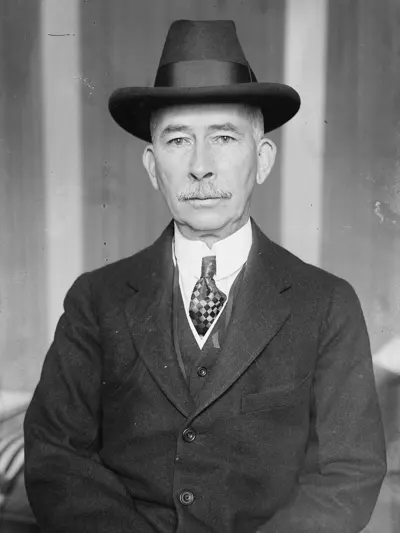
Edward Mandell House was an American diplomat, and an advisor to President Woodrow Wilson. He was known by the nickname Colonel House, although he had performed no military service. He was a highly influential back-stage politician in Texas before becoming a key supporter of the presidential bid of Wilson in 1912. Having a self-effacing manner, he did not hold office but was an "executive agent", Wilson's chief advisor on European politics and diplomacy during World War I (1914–18) and at the Paris Peace Conference of 1919. In 1919 Wilson, suffering from a series of small strokes, broke with House and many other top advisors, believing they had deceived him at Paris.
