John Stuart Mill Quotes
Another important consideration is the great mischief of unintermitted electioneering. When the highest dignity in the State is to be conferred by popular election once in every few years, the whole intervening time is spent in what is virtually a canvass. President, ministers, chiefs of parties, and their followers, are all electioneerers: the whole community is kept intent on the mere personalities of politics, and every public question is discussed and decided with less reference to its merits than to its expected bearing on the presidential election.
John Stuart Mill, 1806-1873, Member of Parliament, British Political Economist, Representative Government, 1861
Sourced by: Eigen's Political and Historical Quotations


In 2012, the Republican party had shifted to the right and was split between two factions. None of the 4 leading candidates had the support of a majority of the activist Republicans who vote in Primary elections. The then started to vie with each other for the most conservative elements of the party and did so by attacking the other candidates, making moral pronouncements and attacking President Obama. None of them offered any positive programs or solutions to the problems they claimed existed, and the attacks on the others were always that they were “really not conservative” and “could not get elected.” The result was that all the candidates negatives rose.


He was a liberal Republican in an era where the Republican paty was controlled by arch conservatives, the Tea Party extremists, and evangelical Protestants while Gullani was divorced, a Catholic, and lived openly with a woman to whom he was not married. He supported a woman’s right to abortion and gay rights.


_0_PostageStamp_47x47.jpg "Chairman of the Joint Chiefs of Staff Navy Adm. Mike Mullen gives an interview to John Dickerson during the CBS news program Face the Nation in Washington, D.C., July 5, 2009. During the interview, Mullen discussed the wars in Iraq and Afghanistan, North Korea's recent missile tests and his recent visit to Russia. (DoD photo by Mass Communication Specialist 1st Class Chad J. McNeeley, U.S. Navy/Released)")


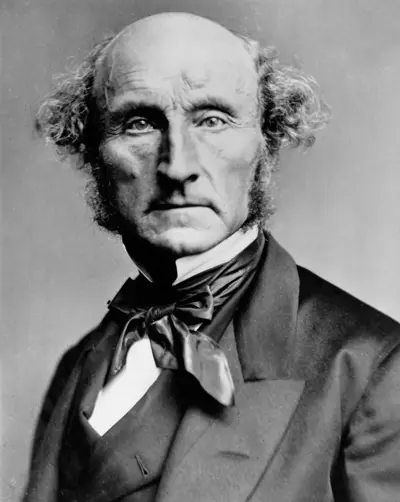
John Stuart Mill, usually cited as J. S. Mill, was an English philosopher, political economist, Member of Parliament, and civil servant. One of the most influential thinkers in the history of classical liberalism, he contributed widely to social theory, political theory, and political economy. Dubbed "the most influential English-speaking philosopher of the nineteenth century", he conceived of liberty as justifying the freedom of the individual in opposition to unlimited state and social control.
