W. Averell Harriman Quotes
He [Jimmy Carter] can't win the presidency. I don't even know him.
Harriman was the senior Democratic leader of the era. Every aspiring Democratic politician would make it his business to get to meet Harriman and try and get his endorsement. However, Carter was not a typical politician and when he decided to run for the Presidency, he had not even met many of the leading Democratic Party leaders. Harriman, a man of the old school, could not believe that anyone in the party who he did not know could possibly have the connections and the sophistication to win the presidency. However, Watergate had seared the American political soul and voters were not looking for a veteran, sophisticated politician. Nixon had been that.
W. Averell Harriman, 1891-1986, U. S. Ambassador to Russia and to England, New York Governor (Democrat), U.S. Ambassador-at-Large, U. S. Secretary of Commerce, Remark, 1975
Sourced by: Eigen's Political and Historical Quotations


His opponent was Al Gore Sr. whose wife came up with the idea of placing signs underneath the McKeller signs saying, “Think Some More and Vote For Gore!”


The three richest men in America—John D, Rockefeller, Andrew Carnegie, and Morgan, usually major rivals—had gathered together to decide what to do about William Jennings Bryan, who they viewed as very hostile to business and capitalism. (See {641037} and {641038} for Bryan quotation examples that concerned them.) They agreed to combine their efforts and back William McKinley who was running for the Republican Presidential nomination. In those days, the nominee was chosen by a small group of party leaders and their resources guaranteed McKinley the post. They then put large amounts of money to campaigning against Bryan and for McKinley including dirty tricks, many of which are illegal today. It is not known for certain whether McKinley knew the extent of the involvement of the monopolists, but shortly after assuming the Presidency he cut back on many of the relatively few regulations that then existed to control unbridled capitalism. Their effort went for naught when McKinley was assassinated and Theodore Roosevelt became President. Roosevelt would not be bribed or intimidated, and he did more to control monopolies than even Bryan would likely have.

In reality, Donald Trump won despite the opoposition of the leaderships of both political parties. In the Republican Primary elections he defeated the condidates preferred by the Republican leaders and elected officials accross the country. However, once he won the promaries, most--many reluctantly--supported him rather than the Democrat. Then Tump, to almsot everyone's surprise, bested Hillary Clinton, the Democratic Candidate and became President.


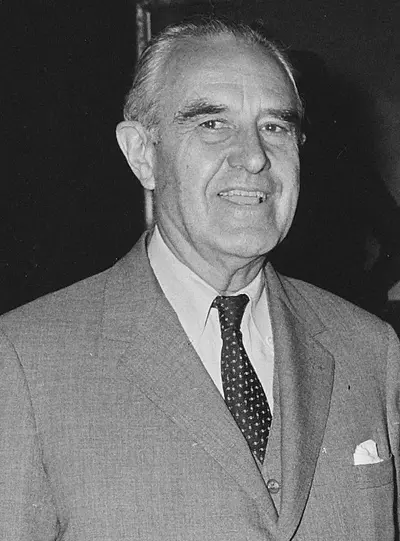
William Averell Harriman, better known as Averell Harriman, was an American Democratic politician, businessman, and diplomat. The son of railroad baron E. H. Harriman, he served as Secretary of Commerce under President Harry S. Truman, and later as the 48th Governor of New York. He was a candidate for the Democratic presidential nomination in 1952 and 1956, as well as a core member of the group of foreign policy elders known as "The Wise Men".
