J. P. Morgan Quotes
We have to buy our own President
The three richest men in America—John D, Rockefeller, Andrew Carnegie, and Morgan, usually major rivals—had gathered together to decide what to do about William Jennings Bryan, who they viewed as very hostile to business and capitalism. (See {641037} and {641038} for Bryan quotation examples that concerned them.) They agreed to combine their efforts and back William McKinley who was running for the Republican Presidential nomination. In those days, the nominee was chosen by a small group of party leaders and their resources guaranteed McKinley the post. They then put large amounts of money to campaigning against Bryan and for McKinley including dirty tricks, many of which are illegal today. It is not known for certain whether McKinley knew the extent of the involvement of the monopolists, but shortly after assuming the Presidency he cut back on many of the relatively few regulations that then existed to control unbridled capitalism. Their effort went for naught when McKinley was assassinated and Theodore Roosevelt became President. Roosevelt would not be bribed or intimidated, and he did more to control monopolies than even Bryan would likely have.
J. Pierpont Morgan, 1837-1913, Financier, Statement to John D. Rockefeller and Andrew Carnegie, 1896
Sourced by: Eigen's Political and Historical Quotations


Hanna, managing William McKinley’s Presidential Campaign against William Jennings Bryan, outspent is opponents by a factor of ten to one. Few understood that at the time or the profound effect that money could play in national politics. Hanna was a political strategist far ahead of his time.


Chung was convicted for illegal campaign fundraising for the William Clinton administration.


Hanna was returning from President William McKinley's funeral in Buffalo, NY. Hanna had been concerned even when Roosevelt was nominated Vice President. See related quotes.


This quotation illustrates the "winner take all" conceopt of many political cultures that call themselves and think of theselves as a democracy. But a true democracy does not allow a tyranny of the majority--especially a very narrow minority.


Harriman was the senior Democratic leader of the era. Every aspiring Democratic politician would make it his business to get to meet Harriman and try and get his endorsement. However, Carter was not a typical politician and when he decided to run for the Presidency, he had not even met many of the leading Democratic Party leaders. Harriman, a man of the old school, could not believe that anyone in the party who he did not know could possibly have the connections and the sophistication to win the presidency. However, Watergate had seared the American political soul and voters were not looking for a veteran, sophisticated politician. Nixon had been that.

When it came to legislation that affected veterans, the members of Congress were in an all or nothing situation. If there was a bill to extend or improve a benefit for veterans, the member would be classified completely on how he/she voted on the singular issue.


See Noah Dietrich’s warning to Richard M. Nixon.


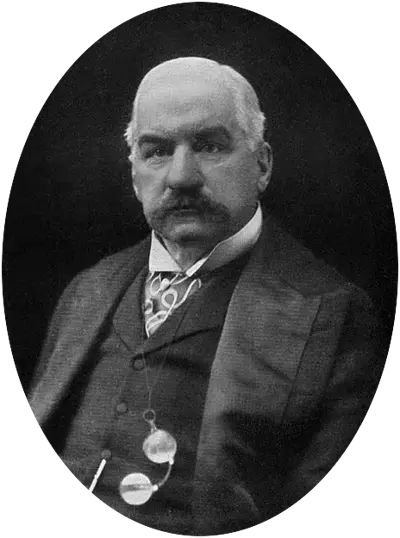
- Born: April 17, 1837
- Died: March 31, 1913
- Nationality: American
- Profession: Financier, Banker, Accountant, Art Collector
John Pierpont Morgan was an American financier and banker who dominated corporate finance on Wall Street throughout the Gilded Age. As the head of the banking firm that ultimately became known as J.P. Morgan and Co., he was a driving force behind the wave of industrial consolidation in the United States spanning the late 19th and early 20th centuries.
