Charles Evans Hughes Quotes
It is extraordinary how reluctant aged judges are to retire and to give up their accustomed work. They seem to be tenacious in the appearance of adequacy.
Charles Evans Hughes, 1862-1948, Chief Justice, U. S. Supreme Court, U. S. Secretary of State, Governor of New York (Republican), Republican Presidential Candidate, The Supreme Court of the United States, 1928
Sourced by: Eigen's Political and Historical Quotations


18 years later, his son—George W. Bush—made the “nutty idea” one of the main planks in his Presidential legislative program. After the younger Bush traveled the country selling his reform ideas, the public came down on the side of his father and rejected the President’s “nutty idea.”

This statement was quoted over and over by his Presidential opponent, Lyndon Johnson in the campaign of 1964. Although, a wealthy person could on the average do a little better with a private investment of equivalent money and a disability insurance, those citizens of less wealth could not do so as easily. And few could obtain the disability and survivor benefits that comes along with Social Security. Goldwater wanted to make Social Security Voluntary, and most Americans thought the Goldwater prescription for Social Security would kill the program and did not support him. Conservatives have argued for this idea ever since, including Geirge W. Bush who made it a centerpiece of his administration’s program. It was rejected by the voters, and most of those were proven right when with the 2008 stocks had lost 50% of their value—the people who had retired and depended on their return from investments were mostly in terrible trouble. And of course, even in good times, some people who invest in the stock and bond markets do well and some do poorly. What would society do about those who lost most of their retirement. Let them starve because they invested badly?

She was also Australia’s First Woman Cabinet Minister.


Privatization is a proposal whereby individuals invest their own money in the Sock and Bond Market in an effort to get a better return than the government Social Security System produces. However, the initial cost is very high and the idea might be good for an individual hose investments pay off, but there could be no coverage for someone who invests poorly, is unlucky or whose investing agency goes bankrupt. There would be a lesser or no safety net which people would be guaranteed as they are with Social Security. In 2006 the George W. Bush administration tried to privatize the Social Security system. They failed in a major defeat for the administration.


Being a member of the House of Representatives of New Hampshire:


In effect this was one of the first organized systems of Social Security and disability insurance—one of the first social safety nets.

This is a classic statement from the Tea Party wing of the Republican Party. Here he not only criticizes the most successful and popular program in American History, but he describes it as a criminal fraud and then claims that Social Security is the biggest threat to our democracy—a bigger threat than Al Qaeda and terrorism, a greater threat than global warming, a greater threat than the housing bubble and the Great Recession. The Tea Party blindness to the effect of these gross exaggerated and obviously false claims is fascinating. He seems totally sincere and yet it is hard for voters to believe that he actually has faith in what he says—although perhaps faith is all he has.

Social Security was part of FDR’s New Deal legislation. It was passed in the middle of the Great Depression in 1936. By the end of the 20th century many people had forgotten or never learned that Social Security was a government social program. It provided relieve for two of the biggest social problems—old age retirement and disability. Most people have no idea that they had disability insurance covered by Social Security throughout their working lives unless they happened to be disabled. The price of a comparable private disability plan would be substantial, yet it is a benefit that most people have and few know it.


Privatizing Social Security was the main piece of proposed legislation of George W. Bush’s second term. It was a conservative mantra for several years. It was finally defeated by a grass roots campaign of what Bush and his supporters referred to as scare tactics—projecting what might happen if the plan were implemented and the stock market went down substantially. With the Meltdown of 2008, the market crashed and this is what Galbraith is referring to. It would have been much worse than any of the privatization opponents had suggestion that even the staunchest economic conservatives would no longer advocate for privatizing Social Security. It was never even suggested in the Republican-controlled House of Representatives of 2012-2013.
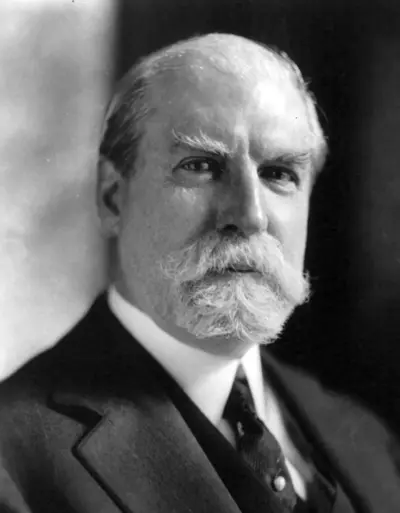
Charles Evans Hughes Sr. was an American statesman and politician who served as the 11th Chief Justice of the United States from 1930 to 1941. A member of the Republican Party, he was also the 36th Governor of New York, the Republican nominee in the 1916 presidential election, and the 44th United States Secretary of State.
