Charles B. Rangel Quotes
The only winner in Privatization is Wall Street.
Privatization is a proposal whereby individuals invest their own money in the Sock and Bond Market in an effort to get a better return than the government Social Security System produces. However, the initial cost is very high and the idea might be good for an individual hose investments pay off, but there could be no coverage for someone who invests poorly, is unlucky or whose investing agency goes bankrupt. There would be a lesser or no safety net which people would be guaranteed as they are with Social Security. In 2006 the George W. Bush administration tried to privatize the Social Security system. They failed in a major defeat for the administration.
Charles B. Rangel, U. S. Congressman (Democrat, NY), Speech, Rally Against Social Security Private Accounts, Washington DC, April 26, 2005
Sourced by: Eigen's Political and Historical Quotations


For many general government regulations—labor, environment, non discrimination—the small business has a proportionately heavier burden of compliance. So large businesses have always been able to count on small business to lobby against regulation and for deregulation. However, when it comes to financial regulation such as the Dodd-Frank regulations essentially apply to large businesses. As a matter of fact, small businesses were on many ways the most frequent victims of the large banks and investment bank excesses in the Meltdown of 2008. Before most of the regulations could even take effect, the financial industry was already trying to get small business to lobby to roll back the protective regulations preventing future meltdowns and bank failure resulting from loose regulation and greedy irresponsible financial industry behavior. The President campaigned to convince the small business not to support the finance industry over their usual “knee jerk” reaction to any regulation.


Privatizing Social Security was the main piece of proposed legislation of George W. Bush’s second term. It was a conservative mantra for several years. It was finally defeated by a grass roots campaign of what Bush and his supporters referred to as scare tactics—projecting what might happen if the plan were implemented and the stock market went down substantially. With the Meltdown of 2008, the market crashed and this is what Galbraith is referring to. It would have been much worse than any of the privatization opponents had suggestion that even the staunchest economic conservatives would no longer advocate for privatizing Social Security. It was never even suggested in the Republican-controlled House of Representatives of 2012-2013.


This statement was quoted over and over by his Presidential opponent, Lyndon Johnson in the campaign of 1964. Although, a wealthy person could on the average do a little better with a private investment of equivalent money and a disability insurance, those citizens of less wealth could not do so as easily. And few could obtain the disability and survivor benefits that comes along with Social Security. Goldwater wanted to make Social Security Voluntary, and most Americans thought the Goldwater prescription for Social Security would kill the program and did not support him. Conservatives have argued for this idea ever since, including Geirge W. Bush who made it a centerpiece of his administration’s program. It was rejected by the voters, and most of those were proven right when with the 2008 stocks had lost 50% of their value—the people who had retired and depended on their return from investments were mostly in terrible trouble. And of course, even in good times, some people who invest in the stock and bond markets do well and some do poorly. What would society do about those who lost most of their retirement. Let them starve because they invested badly?


In the midst of the Great Depression, Townsend had organized millions of Americans into “Townsend Clubs” to save money for their old age retirement. Townsend had proposed that the Government should run such a program where workers paid in every week and then all who were retired or disabled received $30 a week for like. Most economists of the time thought the Townsend old age pension plan unworkable: There was no national pension plan at the time. When Townsend together with two right wing religious extremists formed the Union Party, the one vulnerability that the Roosevelt Administration felt it had was the lack of an old-age pension plan. Within a few days, Roosevelt proposed a new plan of the New Deal to Congress. It was called Social Security. It passed in record time. See {616648} for Harry S Truman’s view of economists.


The best examples are Social Security and Medicare.


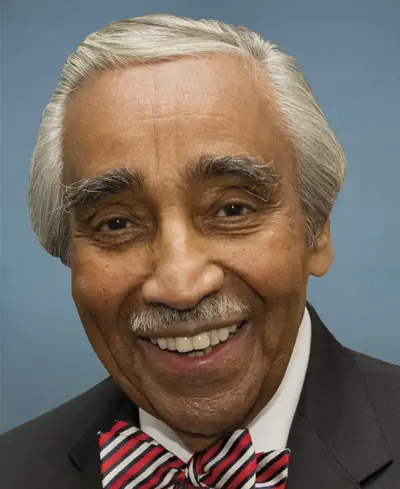
Charles Bernard Rangel is an American politician who was a U.S. representative for districts in New York from 1971 to 2017. A member of the Democratic Party, he was the second-longest serving incumbent member of the House of Representatives at the time of his retirement, serving continuously since 1971. As its most senior member, he was also the Dean of New York's congressional delegation. Rangel was the first African-American Chair of the influential House Ways and Means Committee. He is also a founding member of the Congressional Black Caucus.
