Barack Obama Quotes
I don’t believe rolling back some regulations on Wall Street will in any way help the small business.
For many general government regulations—labor, environment, non discrimination—the small business has a proportionately heavier burden of compliance. So large businesses have always been able to count on small business to lobby against regulation and for deregulation. However, when it comes to financial regulation such as the Dodd-Frank regulations essentially apply to large businesses. As a matter of fact, small businesses were on many ways the most frequent victims of the large banks and investment bank excesses in the Meltdown of 2008. Before most of the regulations could even take effect, the financial industry was already trying to get small business to lobby to roll back the protective regulations preventing future meltdowns and bank failure resulting from loose regulation and greedy irresponsible financial industry behavior. The President campaigned to convince the small business not to support the finance industry over their usual “knee jerk” reaction to any regulation.
Barack Obama, 44th President of the United States (Democrat, IL), United States Senator (Democrat, IL), Speech, Democratic National Convention, Charlotte, North Carolina, September 6, 2012
Sourced by: Eigen's Political and Historical Quotations

The result was regulation of the banks and the creation of the SEC to regulate the stock market, However, over the years, the regulations were not able to keep up with the sophisticated development of new forms of investments and financial instruments and the financial industry were able to speculate with other people’s money in ways that FDR and his reformers never imagined. Finally, even the regulation that did exist was weakened by the policies of the George W. Bush administration and the combination brought about the Great Recession of 2008 where the profits from excess speculation were privatized and the losses, socialized with the taxpayer and the American worker bearing the brunt while most of the speculators were bailed out and made more money than ever. The Obama administration tried to reform the situation, but was unable to put an end to the legal speculation with other people’s money or of having institutions that were “too big to fail.”


Privatization is a proposal whereby individuals invest their own money in the Sock and Bond Market in an effort to get a better return than the government Social Security System produces. However, the initial cost is very high and the idea might be good for an individual hose investments pay off, but there could be no coverage for someone who invests poorly, is unlucky or whose investing agency goes bankrupt. There would be a lesser or no safety net which people would be guaranteed as they are with Social Security. In 2006 the George W. Bush administration tried to privatize the Social Security system. They failed in a major defeat for the administration.


At the time, the financial industry spent more money for lobbyists and campaign contributions than any other sector of the economy. The result is that they had extraordinary access to and influence upon members of Congress and their staffs, that more often than not, the actually drafted the language for laws, amendments and regulations and then les the strategy to pass the legislation or finalize the rule. Moreso than any other industry, they wrote their own rules. Even after the Meltdown of 2008 and the Great Recession where there was a public outcry for reform, the Dodd Frank legislation was influenced by the industry and after passage most of the rules and interpretations were written by the industry or greatly influenced by them.


The Dodd Frank bill was designed, in the aftermath of the large bank induced meltdown of 2008 and the Great Recession, to regulate the banking industry so that no bank would be “too big to fail”. However, although the bill placed many restrictions on the banks to prevent much of their risky economic behavior, which the banks complained inhibited their growth and profitability. However, the bill did not put any limits on the size of the large banks and their critical proportion of the U. S. Financial System. If a bank was large enough, the government did not dare allow the bank to fail regardless of how profligate the Bank had been with its depositors’ money. So the shareholders made big money from the Bank’s risky behavior if it turned out well, and if not the taxpayers had to bail the banks out, because they were too big to fail without causing much of the rest of the country to also fail. Warren and others wanted a simple solution. Break up the large banks into smaller ones and then if any one of the small units makes poor investments, the bank could fail and other than its shareholders and creditors, the effect would not be so serious that the government could not allow the bank to go into bankruptcy. Mismanaged banks could fail like other mismanaged companies and not take down much or the rest of the country with them. But the banks lobbied to prevent that, and by 2014, 6 years after the taxpayers had to bail out banks that were too big to fail, many of the banks were twice as large as they were when they were already too big to fail.


This quotation is particularly interesting in it shows how far partisanship and ideology can go into deluding political perception. Wallinson is a man of integrity who we must assumed believed what he said. Yet in the 30 years he referred to, most had Republican Presidents and there were a number of Republican controlled Congresses. During all that time the Republican Party platform called for continuous deregulation. Every Republican President and even Democrat William Clinton has bragged about their success at deregulating the business and financial environment in America. During that period, left wingers paraded to testify to Congress that the deregulation policies and practices was in their view injuring the country, While there was great debate over the desirability of deregulation, virtually no elected politician of the left or right denied that deregulation was happening. The Chamber of Commerce during that time always complained that the deregulation was not occurring fast enough and consumer groups claimed the rate was too fast. Yet Wallinson instead of taking the position of most conservatives that the deregulation had little or nothing to do with the Financial Crisis of 2008, actually convinced himself that there had been no deregulation. Human perception of political reality can be easily altered by ideology. Similar delusions have also occurred for left wingers. It is the ideology who is vulnerable regardless of what the ideology is.

Arguably, for most of American History, most of the “smartest” people contributed to manufacturing, construction, research and development—activities that produce things that are wanted and/or needed. However, Wall Street began attracting and paying for some of the smartest people in the society, who when they engaged in finance—not only contributed less to manufacturing, but began to create highly complex financial instruments and procedures that few people could understand and with which regulators have difficulty understanding. These and the other schemes of financing have been major factors in the economic problems that have beset the economy including the meltdown of 2008 and the subsequent Great Rescission.

Despite this, he recommended that the average person should participate in some limited ways.

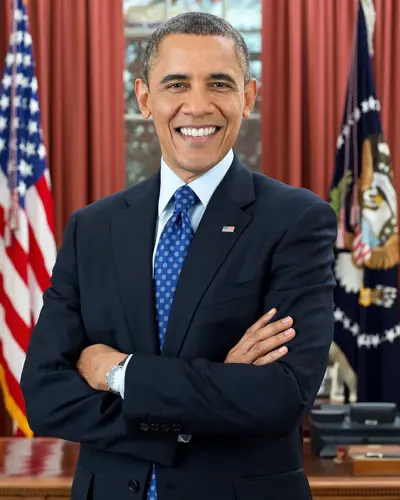
Barack Hussein Obama II is an American politician and attorney who served as the 44th president of the United States from 2009 to 2017. A member of the Democratic Party, Obama was the first African-American president of the United States. He previously served as a U.S. senator from Illinois from 2005 to 2008 and as an Illinois state senator from 1997 to 2004.
