Suzanne Mettler Quotes
Only 44 percent of Social Security beneficiaries perceive themselves to have benefitted from a government social program.
Social Security was part of FDR’s New Deal legislation. It was passed in the middle of the Great Depression in 1936. By the end of the 20th century many people had forgotten or never learned that Social Security was a government social program. It provided relieve for two of the biggest social problems—old age retirement and disability. Most people have no idea that they had disability insurance covered by Social Security throughout their working lives unless they happened to be disabled. The price of a comparable private disability plan would be substantial, yet it is a benefit that most people have and few know it.
Suzanne Mettler, Political Scientist, The Submerged State: How Invisible Government Policies Undermine American Democracy, 2011
Sourced by: Eigen's Political and Historical Quotations

This is a classic statement from the Tea Party wing of the Republican Party. Here he not only criticizes the most successful and popular program in American History, but he describes it as a criminal fraud and then claims that Social Security is the biggest threat to our democracy—a bigger threat than Al Qaeda and terrorism, a greater threat than global warming, a greater threat than the housing bubble and the Great Recession. The Tea Party blindness to the effect of these gross exaggerated and obviously false claims is fascinating. He seems totally sincere and yet it is hard for voters to believe that he actually has faith in what he says—although perhaps faith is all he has.

Both of these programs have been amongst the most popular programs in American History. Yet for Republican conservatives at the beginning of the 21st century, these were programs that they wanted to either terminate of alter in such severe manners that they would not be anything like the original programs. When these programs were passed by Congress, most Republicans were opposed to the legislation but enough were supportive to have bipartisan support. However, by 2000, most liberal Republicans had been driven out of the party, and it was the Democrats who kept the programs alive and in force despite the Republican assaults. The Democrats had public opinion on their side on these battles and even most registered Republicans opposed President George W. Bush’s major attempt to privatize Social Security.


18 years later, his son—George W. Bush—made the “nutty idea” one of the main planks in his Presidential legislative program. After the younger Bush traveled the country selling his reform ideas, the public came down on the side of his father and rejected the President’s “nutty idea.”


This is one of the rare occasions where the person appointed to lead a major governmental program, publicy trashed the program and told citizens that they would never receive the benefits that they had already paid for. She was a partisan political appointment who had no real credentials, preparation or previous experience and her statement was so overtly political that few took the statement seriously although there were well known problems that Congress could fix as soon as they have the political will to do so. In the 15 years since this statement not a single worker has failed to obtain any benefits to which he/she was entitled. To see why such a statement can never be made with any certainty, see {619986} which explains the essence of Social Security.


It was not known whether he actually believes such an extreme statement, or he just made it to pander to the extreme right wing of the Republican Party who were a large part of his political base. In effect he was calling the Great Republican Presidents after WWII like Eisenhower a con artist. See {622864}. A Ponzi Scheme is an illegal investment scheme designed so that the early investors get paid by the later investors and the crook running it skims money off the top and has no intention whatso ever to pay off the later investors. It is named after a Bostom Crook who ran the scam in the early 20th century.


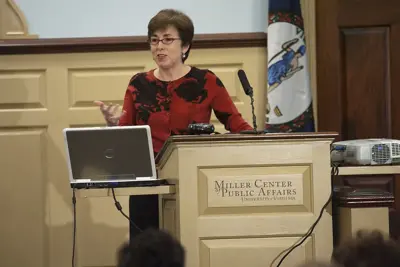
Suzanne Mettler is an American political scientist and author, known for her research about the way Americans view and respond to the government in their lives, and helping to stimulate the study of American political development.
