Gary Gilmore Quotes
It's a great job for a retired person. They feel a little important, get out of the house.
Being a member of the House of Representatives of New Hampshire:
Gary Gilmore, Representative, New Hampshire House of Representatives (Democrat), Quoted in The Washington Post, April 30, 1989
Sourced by: Eigen's Political and Historical Quotations


18 years later, his son—George W. Bush—made the “nutty idea” one of the main planks in his Presidential legislative program. After the younger Bush traveled the country selling his reform ideas, the public came down on the side of his father and rejected the President’s “nutty idea.”

This statement was quoted over and over by his Presidential opponent, Lyndon Johnson in the campaign of 1964. Although, a wealthy person could on the average do a little better with a private investment of equivalent money and a disability insurance, those citizens of less wealth could not do so as easily. And few could obtain the disability and survivor benefits that comes along with Social Security. Goldwater wanted to make Social Security Voluntary, and most Americans thought the Goldwater prescription for Social Security would kill the program and did not support him. Conservatives have argued for this idea ever since, including Geirge W. Bush who made it a centerpiece of his administration’s program. It was rejected by the voters, and most of those were proven right when with the 2008 stocks had lost 50% of their value—the people who had retired and depended on their return from investments were mostly in terrible trouble. And of course, even in good times, some people who invest in the stock and bond markets do well and some do poorly. What would society do about those who lost most of their retirement. Let them starve because they invested badly?


She was over 80 when she said this.

She was also Australia’s First Woman Cabinet Minister.

There had been a heat wave in Europe that summer during the traditional August French vacation month with the result that there were few physicians, nurses, police, and other professionals in Paris to handle the emergency. Over 10,000 people died of the heat, most of them elderly.


There was no welfare and no Social Security then. Sinclair’s idea and another by a Physician by the name of Townsend (see {36007} ) were the only two ideas in the table about old age pensions. Franklin Delano Roosevelt, noting the appeal of Sinclair and the Townsend plan pushed Social Security shortly thereafter and it became law in 1936. This quotation illustrates that losing candidates and their programs can have a very profound effect on public policy.
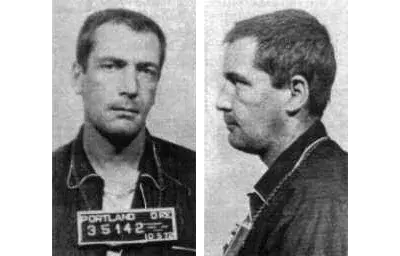
Gary Mark Gilmore (Faye Robert Coffman) was an American criminal who gained international attention for demanding the implementation of his death sentence for two murders he had admitted to committing in Utah. After the U.S. Supreme Court upheld a new series of death penalty statutes in the 1976 decision Gregg v. Georgia, he became the first person in almost ten years to be executed in the United States. These new statutes avoided the problems under the 1972 decision in Furman v. Georgia, which had resulted in earlier death penalty statutes being deemed "cruel and unusual" punishment, and therefore unconstitutional. (The Supreme Court had previously ordered all states to commute death sentences to life imprisonment after Furman v. Georgia.) Gilmore was executed by a firing squad in 1977. His life and execution were the subject of the 1979 nonfiction novel The Executioner's Song by Norman Mailer, and 1982 TV film of the novel starring Tommy Lee Jones as Gilmore.
