Robert Owen Quotes
In advanced age, and in cases of disability from accident, natural infirmity or any other cause, the individual shall be supported by the colony, and receive every comfort which kindness can administer
In effect this was one of the first organized systems of Social Security and disability insurance—one of the first social safety nets.
Robert Owen, 1771-1858, Welsh Social Reformer, The Social System, 1826
Sourced by: Eigen's Political and Historical Quotations


She was also Australia’s First Woman Cabinet Minister.


There was no welfare and no Social Security then. Sinclair’s idea and another by a Physician by the name of Townsend (see {36007} ) were the only two ideas in the table about old age pensions. Franklin Delano Roosevelt, noting the appeal of Sinclair and the Townsend plan pushed Social Security shortly thereafter and it became law in 1936. This quotation illustrates that losing candidates and their programs can have a very profound effect on public policy.


The minimum wage has never come close to meeting this ideal criterion in any country of the world. At the same time, health insurance costs in the U. S. and some other countries has been increasing at a much greater rate than wages, making this ideal situation even more unattainable.


Both of these programs have been amongst the most popular programs in American History. Yet for Republican conservatives at the beginning of the 21st century, these were programs that they wanted to either terminate of alter in such severe manners that they would not be anything like the original programs. When these programs were passed by Congress, most Republicans were opposed to the legislation but enough were supportive to have bipartisan support. However, by 2000, most liberal Republicans had been driven out of the party, and it was the Democrats who kept the programs alive and in force despite the Republican assaults. The Democrats had public opinion on their side on these battles and even most registered Republicans opposed President George W. Bush’s major attempt to privatize Social Security.

What makes this a noteworthy political quotation is that when he made the statement, his party had lurched to the radical right and almost no one else in the Republican party would publicly say that the Federal Government had any legitimate role that involved social services, food distribution, welfare or health care. Also the Republican Presidential candidate the day before had been discovered writing off the poorest 43 percent of the country. Heller however, was up for reelection in a state what was hit much harder than most in the Great Recession and without Federal Assistance many state residents would be in terrible circumstances and Heller would not fare well in the election if he took the then required Republican ideology. Also, Heller came from a blue collar family and had a much different outlook than most Republicans of that particular time.

This statement was quoted over and over by his Presidential opponent, Lyndon Johnson in the campaign of 1964. Although, a wealthy person could on the average do a little better with a private investment of equivalent money and a disability insurance, those citizens of less wealth could not do so as easily. And few could obtain the disability and survivor benefits that comes along with Social Security. Goldwater wanted to make Social Security Voluntary, and most Americans thought the Goldwater prescription for Social Security would kill the program and did not support him. Conservatives have argued for this idea ever since, including Geirge W. Bush who made it a centerpiece of his administration’s program. It was rejected by the voters, and most of those were proven right when with the 2008 stocks had lost 50% of their value—the people who had retired and depended on their return from investments were mostly in terrible trouble. And of course, even in good times, some people who invest in the stock and bond markets do well and some do poorly. What would society do about those who lost most of their retirement. Let them starve because they invested badly?

Forseth forgets that in Canada and the United States, as well as most other countries with equivalent systems, the individual worker pays into the Social Security Trust Fund and have paid for their insurance during their working career. Social Security has been solvent so no general welfare money has come into the system. Other conservatives complain that the yield that Social Security pays is not as large as it could be with a private investment and insurance option, so most conservatives do not even think of Social Security as a type of welfare.

18 years later, his son—George W. Bush—made the “nutty idea” one of the main planks in his Presidential legislative program. After the younger Bush traveled the country selling his reform ideas, the public came down on the side of his father and rejected the President’s “nutty idea.”


Social Security was part of FDR’s New Deal legislation. It was passed in the middle of the Great Depression in 1936. By the end of the 20th century many people had forgotten or never learned that Social Security was a government social program. It provided relieve for two of the biggest social problems—old age retirement and disability. Most people have no idea that they had disability insurance covered by Social Security throughout their working lives unless they happened to be disabled. The price of a comparable private disability plan would be substantial, yet it is a benefit that most people have and few know it.


A professional mature female actress spoke the words. The Majority of the Republicans voted against the Medicare law that had passed under Lyndon Johnson. They lost millions of votes over that for years. Then at the end of the 20th century, many Republicans tried to reduce or privatize Medicare which by then was second only to Social Security among all government programs. The Democrats then used many variants of this Schwartz ad to great effect.

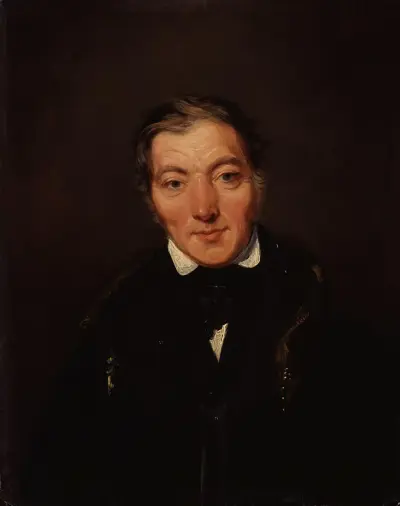
Robert Owen, a Welsh textile manufacturer, philanthropist and social reformer, was one founder of utopian socialism and the cooperative movement. He is known for efforts to improve factory working conditions for his workers and promote experimental socialistic communities. In the early 1800s, he became wealthy as an investor and eventual manager of a large textile mill at New Lanark, Scotland. He had initially trained as a draper in Stamford, Lincolnshire, and worked in London before relocating aged 18 to Manchester and becoming a textile manufacturer. In 1824, Owen travelled to America and invested most of his fortune in an experimental socialistic community at New Harmony, Indiana, a preliminary model for Owen's Utopian society. It lasted about two years; other Owenite Utopian communities met similar fates. In 1828, Owen returned to settle in London, where he continued to champion the working class, led the development of cooperatives and the trade union movement, and supported the passage of child labour laws and free co-educational schools.
