Pearl S. Buck Quotes
Ours is an individualistic society, indeed, and the state must do for the individual what the family does for the older civilizations.
Pearl S. Buck, 1892-1973, Nobel Laureate in Literature, The Child Who Never Grew, 1950
Sourced by: Eigen's Political and Historical Quotations


This clause is an interesting combination of liberal and conservative ideas. The former was the fact that it was the society’s obligation to provide jobs for the willing workers and welfare for the needy. At the same time, there was to be no assistance to the people who would not work—a classic conservative welfare reform.


What makes this a noteworthy political quotation is that when he made the statement, his party had lurched to the radical right and almost no one else in the Republican party would publicly say that the Federal Government had any legitimate role that involved social services, food distribution, welfare or health care. Also the Republican Presidential candidate the day before had been discovered writing off the poorest 43 percent of the country. Heller however, was up for reelection in a state what was hit much harder than most in the Great Recession and without Federal Assistance many state residents would be in terrible circumstances and Heller would not fare well in the election if he took the then required Republican ideology. Also, Heller came from a blue collar family and had a much different outlook than most Republicans of that particular time.

In effect this was one of the first organized systems of Social Security and disability insurance—one of the first social safety nets.


1st Viscount Snowden. This quotation is particularly interesting in that we have an early 20th century socialist acknowledging that one of the objectives of Socialism is to increase the individual’s dependency on the state. By the late 19th century, few socialists if any saw this as an objective of socialism. However, this dependency objective is one of the attack points of conservatives who assume that this is a result of socialism whether or not it was intended.


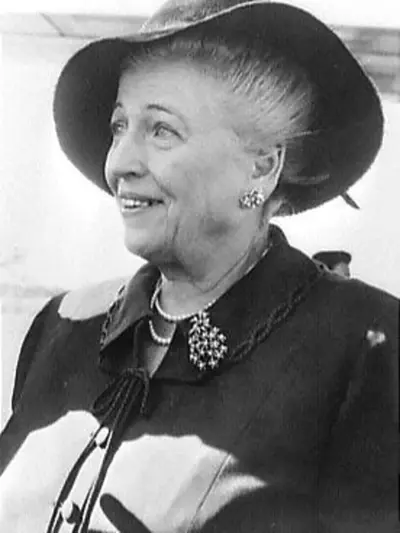
Pearl Sydenstricker Buck also known by her Chinese name Sai Zhenzhu (Chinese: 赛珍珠) was an American writer and novelist. As the daughter of missionaries, Buck spent most of her life before 1934 in Zhenjiang, China. Her novel The Good Earth was the best-selling fiction book in the United States in 1931 and 1932 and won the Pulitzer Prize in 1932. In 1938, she was awarded the Nobel Prize in Literature "for her rich and truly epic descriptions of peasant life in China and for her biographical masterpieces". She was the first American woman to win the Nobel Prize in Literature.
