Lyndon B. Johnson Quotes
I do not believe that older Americans should be forced to live out their lives in poverty, their tiny savings destroyed by illness. Dependent upon their relatives. Feeling unwanted by their country.
Lyndon Baines Johnson, 1908-1973, 36th President of the United States (Democrat, TX), Campaign Ad, 1964, Quotation Contributed by Bernard Benjamin Yamron from his Brown University 1995 PhD Dissertation, From Whistle-Stops to Polispots: Political Advertising and Presidential Politics in the United States, 1948-1980
Sourced by: Eigen's Political and Historical Quotations

The cost of health care had become so great that many people—especially those on fixed incomes were not able to afford the costs. The majority of all bankruptcies in America are caused by a family medical problem.


In effect this was one of the first organized systems of Social Security and disability insurance—one of the first social safety nets.

This was written in the early years of the Great Depression. Over 25 percent of Americans were out of world. The stock market had crashed and many banks failed wiping out family savings where there was any. Social Security, Bank and Stock Market Regulations were not yet passed. The New Deal government was just starting creating jobs, but there was great concern that the capitalistic system had failed. Thomas and other critics were right that the U. S. Government had not before used its machinery for “ease and security of living”; they called for the adoption of state socialism. President Roosevelt however instead reformed American capitalism by adding substantial regulation, provided direct relief to the unemployed poor, stimulated the economy, created Social Security, Federal Deposit Bank Insurance, unemployment insurance and initiated massive public works programs. It took almost a decade but American Capitalism was saved and transformed to the greatest industrial output and standard of living increase the world had known. It was not until 2008 that the capitalistic American economy melted down again. Regulation of corporations had diminished. The banks failed and had to be bailed out again but as the result of Social Security, Unemployment Insurance and other programs there was some cushioning of the effect of the Great Recession. The middle and lower class insecurity was back along with the wealthy taking a much larger proportion of the national wealth. The big difference was that few called for an end to capitalism and the political debate was on how best to fix the weaknesses of capitalism. Even most socialists around the world had built their Social Democracies around a capitalistic economic structure.

Both of these programs have been amongst the most popular programs in American History. Yet for Republican conservatives at the beginning of the 21st century, these were programs that they wanted to either terminate of alter in such severe manners that they would not be anything like the original programs. When these programs were passed by Congress, most Republicans were opposed to the legislation but enough were supportive to have bipartisan support. However, by 2000, most liberal Republicans had been driven out of the party, and it was the Democrats who kept the programs alive and in force despite the Republican assaults. The Democrats had public opinion on their side on these battles and even most registered Republicans opposed President George W. Bush’s major attempt to privatize Social Security.


He later claimed that he misspoke. He was particularly damaged by this statement as he was personally very wealthy, was supported by most large corporations, and had been accused of only worrying about the rich and business.

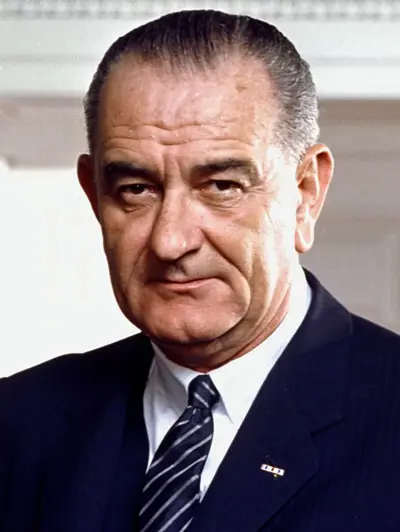
Lyndon Baines Johnson, often referred to by his initials LBJ, was the 36th president of the United States, in office from 1963 to 1969. He served as the 37th vice president from 1961 to 1963 and assumed the presidency following the assassination of President John F. Kennedy. A Democrat from Texas, Johnson was also a United States representative and later majority leader in the United States Senate. Johnson is one of only four people to have served, at various times, in all four federal elected positions.
