Norman Thomas Quotes
There is no use in repeating that threadbare capitalist boast that we have more things than ever before and that workers are better off than were ancient kings. The point is that no age has ever so tragically failed to use the machinery it had for ease and security of living. Things may have increased but so has insecurity. The peasant and artisan of old was assured work and an honorable place in his family and community while he lived. He knew nothing of the dead line at forty or forty-five which gives new terror to old age. He knew almost nothing of unemployment as a social disease which in so-called normal times affects some ten per cent of the workers and is today the lot of twenty-five to thirty-three per cent of them.
This was written in the early years of the Great Depression. Over 25 percent of Americans were out of world. The stock market had crashed and many banks failed wiping out family savings where there was any. Social Security, Bank and Stock Market Regulations were not yet passed. The New Deal government was just starting creating jobs, but there was great concern that the capitalistic system had failed. Thomas and other critics were right that the U. S. Government had not before used its machinery for “ease and security of living”; they called for the adoption of state socialism. President Roosevelt however instead reformed American capitalism by adding substantial regulation, provided direct relief to the unemployed poor, stimulated the economy, created Social Security, Federal Deposit Bank Insurance, unemployment insurance and initiated massive public works programs. It took almost a decade but American Capitalism was saved and transformed to the greatest industrial output and standard of living increase the world had known. It was not until 2008 that the capitalistic American economy melted down again. Regulation of corporations had diminished. The banks failed and had to be bailed out again but as the result of Social Security, Unemployment Insurance and other programs there was some cushioning of the effect of the Great Recession. The middle and lower class insecurity was back along with the wealthy taking a much larger proportion of the national wealth. The big difference was that few called for an end to capitalism and the political debate was on how best to fix the weaknesses of capitalism. Even most socialists around the world had built their Social Democracies around a capitalistic economic structure.
Norman Thomas, 1884-1968, Director, League for Industrial Democracy, Socialist Party candidate for President, Why I am a socialist?, 1932
Sourced by: Eigen's Political and Historical Quotations


This statement was a total reverse of his predecessor’s policy. Hoover stubbornly refused to consider any direct relief for workers on the philosophical ground that it would weaken their character, make them dependent, and provide benefits for the people who were not working so the motivation to work would be lessened. When FDR pronounced this on the radio, it dramatically reversed U. S. policy and gave many people hope that the government might do something about the depression rather than just wait out the business cycle.

Jefferson was one of the first political and economic thinkers to express concern over the “wage slave” concept of the industrial revolution. This was one of the major reasons that he was not in consonance with Alexander Hamilton in his economic vision for America. While we followed the Hamilton direction, there are still issues of maintaining freedom and independence for an employee in modern nations and economies.
New York’s highest court


Essentially Mellon told the President to let the entire economy crash. With huge numbers of people out of work, labor would be more humble and not only settle for lower wages, but will work harder, and without "excess" income beyond their basic needs, they would not drink and engage in other immoral activities. President Hoover, a wealthy man himself, did not go along with Mellon's idea of making the situation worse, but his conservative philosophy of government would not allow the Government to "interfere" with the private economy or give any direct assistance to the citizens.
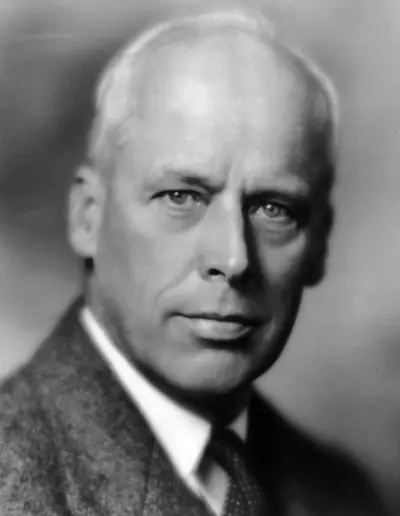
Norman Mattoon Thomas was an American Presbyterian minister who achieved fame as a socialist, pacifist, and six-time presidential candidate for the Socialist Party of America.
